
Holiday Calendar
34 saved#3,812 of 6,224

Old Inauguration Day

A cultural observance on March 4 commemorating the former U.S. presidential inauguration date, prior to the Twentieth Amendment shifting it to January 20 to shorten the lame-duck period.

Thursday
4
March 2027
Last updated February 26, 2026 · by the Holiday Calendar Team
Have an update or spot an error?
YEARLY DATEMarch 4
OBSERVED INUnited States
CATEGORYCulture
SUBCATEGORYCivics
ORIGIN

Community Origin

FOUNDING ENTITY
Not documented
FIRST OBSERVED
Not documented
HOW THE HOLIDAY CAME TO BE

It appears on unofficial calendars commemorating the traditional U.S. presidential inauguration date of March 4, used from 1793 to 1933.

+ Know the story? Submit a founder Help us complete this holiday
INTRO

Introduction

Get ready to travel back in time with Old Inauguration Day on March 4! This unique holiday commemorates the original date for presidential inaugurations, before it was moved to January 20. From George Washington to Franklin D. Roosevelt, presidents were sworn into office on this day until the 20th amendment was ratified in 1933. So why not take a trip down memory lane and learn about the traditions and ceremonies that took place on this special day? It's a great way to celebrate our country's history and honor our past leaders.

Advertisement

TIMELINE

Old Inauguration Day Timeline

First Presidential Inauguration

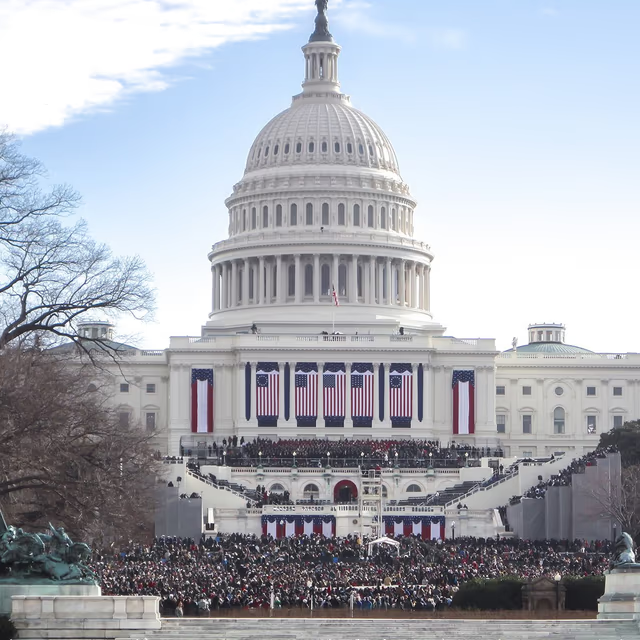
George Washington was inaugurated as the first President of the United States on April 30. However, subsequent inaugurations occurred on March 4th starting from 1793 until the 20th Amendment changed the date.
Inauguration Day Established

Starting from President Washington's second term, March 4 becomes the established date for U.S presidential inaugurations.

March 4th Falls on Sunday

For the first time, Inauguration Day fell on a Sunday in 1821 during James Monroe's second inauguration, causing the ceremony to be postponed to the next day.

Last March 4 Inauguration

Franklin D. Roosevelt was the last president inaugurated on March 4 for his first term. His second inauguration took place on January 20 due to the 20th Amendment.

First January 20 Inauguration

The 20th amendment to the U.S. Constitution moves Inauguration Day to January 20. President Franklin D. Roosevelt becomes the first president inaugurated on the new date for his second term.

GET INVOLVED

How to Celebrate Old Inauguration Day

EDITOR'S PICK

Host a themed party

Throw a party with a theme based on the era of the first presidential inauguration. Encourage guests to dress up and serve traditional food and drinks from that time period.

VISIT

Visit historical sites

Take a trip to Washington D.C. and visit historical sites related to inaugurations, such as the National Archives or the White House. You can also visit the birthplace or grave of your favorite president.

CREATE

Create a presidential trivia game

Gather friends and family for a fun game night with a presidential twist. Create a trivia game with questions about past inaugurations and presidents, and award prizes to the winners.

WATCH

Watch the inauguration

Gather around the TV and watch footage of past inaugurations, or tune in to coverage of the current inauguration. You can also watch documentaries about past presidents and their inaugurations.

WRITE

Write a letter to the president

Take some time to reflect on the importance of presidential inaugurations and write a letter to the current or past president expressing your thoughts and feelings. You never know, you may even receive a response!

WHY THIS DAY MATTERS

Why Old Inauguration Day is Important

It showcases our democratic values

By celebrating Old Inauguration Day, we honor our nation's commitment to democracy and its unwavering belief in fair elections. It serves as a reminder that our country is built on the principles of freedom, equality, and justice for all.

It's a part of American history

Old Inauguration Day, also known as March 4th, was the official start of the presidential term until it was changed to January 20th in 1933. This important date represents a significant era in American history and reminds us of how our country has evolved over time.

It highlights the peaceful transition of power

On Old Inauguration Day, presidents were not sworn in until a few months after they were elected, allowing for a smooth transition of power from one administration to the next. This tradition emphasized the peaceful transfer of authority and the importance of maintaining a stable government.

FOR MARKETERS & CREATORS

Turn every day into a moment your audience actually shows up for.

8.4M
Monthly readers
5K+
Holidays tracked