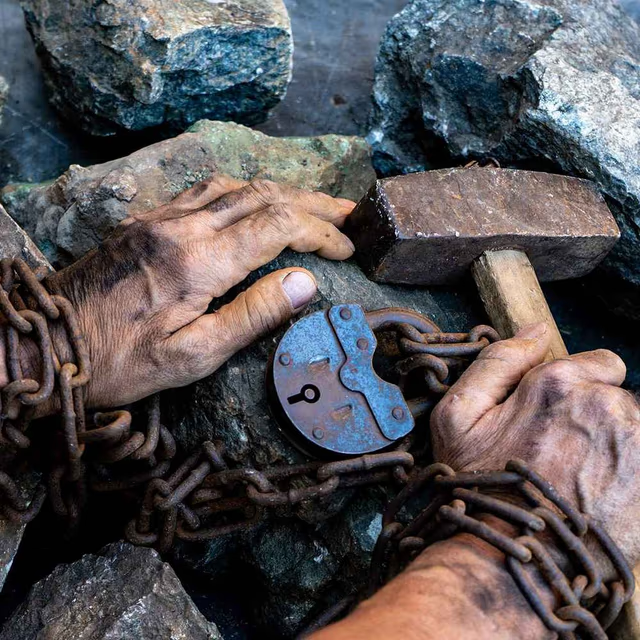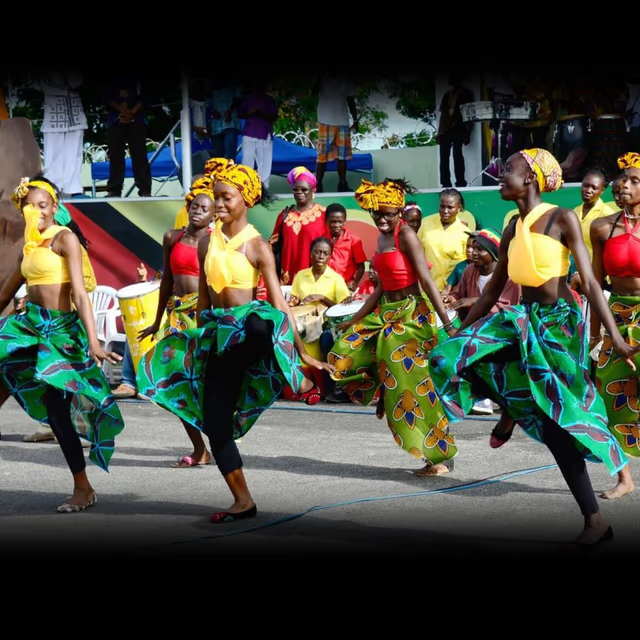

Slavery in Mauritius ended on 1 February 1835, when the British Slavery Abolition Act 1833 took effect there, making Mauritius the last British colony to abolish it; February 1 is now observed nationally, with state commemorations held at the Le Morne Cultural Landscape since the first official ceremony there on 1 February 2005.
CHAPTER 01
A refuge on the mountain
Long before any law freed them, enslaved people in Mauritius freed themselves. The southwest of the island is dominated by Le Morne Brabant, a near-inaccessible basalt mountain whose caves and overhangs became a fortress for maroons, the name given to those who escaped bondage and lived in hiding.
They held the heights through the eighteenth and into the nineteenth century. In 2008, UNESCO inscribed the Le Morne Cultural Landscape on the World Heritage List as an exceptional testimony to resistance to slavery.