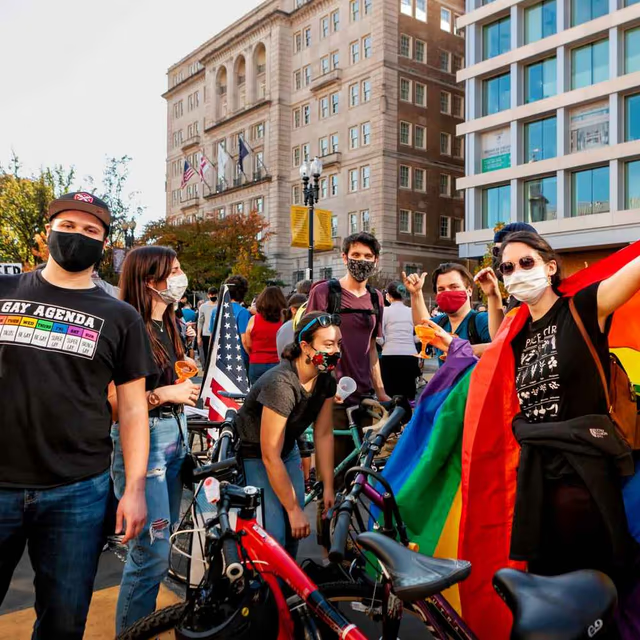
Holiday Calendar

Pride Month

Next celebratedTuesday, June 1, 2027

A month-long cultural observance held across June celebrating LGBTQ+ identity, history, and rights, and commemorating the 1969 Stonewall uprising.

Countdown to the day
--DAYS
--HRS
--MIN
--SEC
Last updated February 26, 2026 · by the Holiday Calendar TeamHave an update or spot an error?
YEARLY DATEAll of June
OBSERVED INInternationally
CATEGORYCulture
SUBCATEGORYLGBTQ+
ORIGIN

Community Origin

FOUNDING ENTITY
Unknown (no single founder; grew from post-Stonewall community organizing)
FIRST OBSERVED
1970
On June 28, 1970, activists marched up Manhattan to mark one year since Stonewall.
HOW THE HOLIDAY CAME TO BE

A street uprising that the calendar never forgot.

Pride grew from community organizing after the June 28, 1969 Stonewall uprising in New York City. On the first anniversary, June 28, 1970, activists held the Christopher Street Liberation Day March in NYC, and organizers later expanded the commemoration into a recurring season of events. President Bill Clinton issued the first federal proclamation naming June a Pride month in 1999.

View 1999 Proclamationvia The American Presidency Project
INTRO

The street fight came first, the federal calendar came thirty years later

June belongs to Pride. The rainbow flags, the marches, the corporate logos: all of it traces back to a police raid on a single bar in 1969. But the United States government did not put the words "Pride Month" on paper until 1999, thirty years later.

For three decades, June was Pride because the community said so, not because any president had. The observance ran on its own organizing long before it ran on a proclamation.

That gap is the real story of the month. It was built from the bottom up, one march at a time, and only later recognized from the top down.

Advertisement
ORIGINS

Pride Month history

INTRODUCTION

The first Pride march was not called Pride. On a Sunday in late June 1970, a crowd gathered near Sheridan Square in Greenwich Village and started walking north.

They were marking an anniversary. One year earlier, the same few blocks had erupted, and the people walking that day had decided the moment should be remembered annually rather than allowed to fade.

CHAPTER 01

The night that started it

In the early hours of June 28, 1969, New York City police raided the Stonewall Inn, a gay bar in Greenwich Village. The raid sparked several nights of demonstrations in the surrounding streets.

The unrest did not invent the gay rights movement, but it galvanized it. By one organizer's count cited by the National Park Service, the number of gay rights groups in the country jumped from roughly 50 or 60 to about 1,500 within a year.
CHAPTER 02

From a march to a season

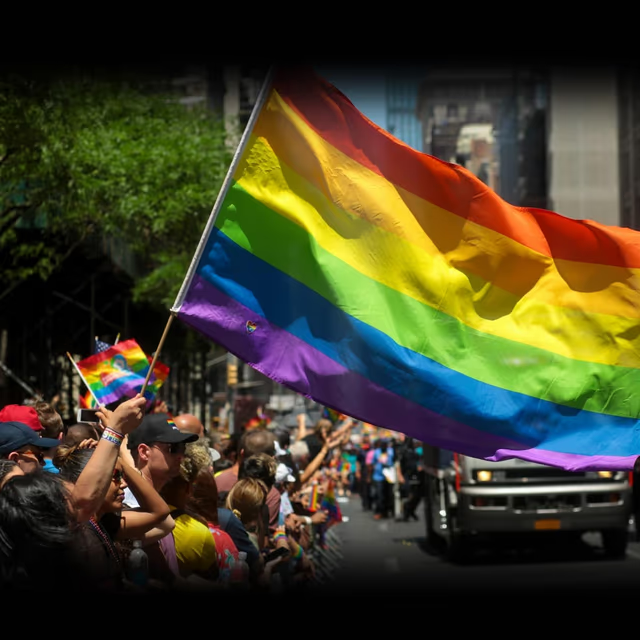
On June 28, 1970, the first anniversary, organizers held the Christopher Street Liberation Day March in New York, ending with a gathering in Central Park. Activists called for parallel marches in other cities.

The committee behind the New York march included Craig Rodwell, Ellen Broidy, Linda Rhodes, and Foster Gunnison Jr. Among the organizers, the bisexual activist Brenda Howard is credited by LGBTQ organizations as the "Mother of Pride" for coordinating early commemorations and championing a week of events.

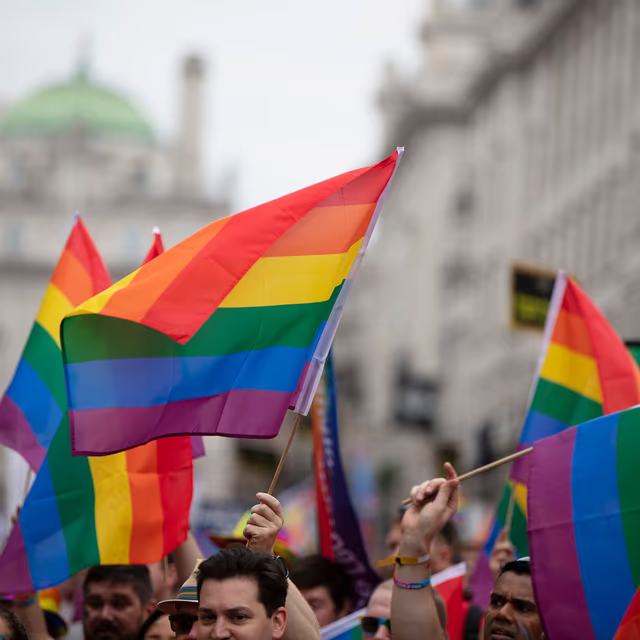
What began as a one-day march grew, over the following decades, into a recurring late-June observance that spread from city to city and country to country.

CHAPTER 03

Washington catches up

Federal recognition came late and arrived in stages. In 1999, President Bill Clinton issued Proclamation 7203, the first to name June "Gay and Lesbian Pride Month." He issued another the next year.

Then it lapsed. President George W. Bush issued no Pride Month proclamation during his eight years in office. The observance returned to the federal record in 2009.

That is when President Barack Obama also broadened the title, renaming the observance "Lesbian, Gay, Bisexual, and Transgender Pride Month." The new name wrote bisexual and transgender Americans into the federal record.

TIMELINE

Timeline

The Stonewall uprising

A June 28 police raid on the Stonewall Inn in Greenwich Village sparks several nights of demonstrations.

The first Pride march

On June 28, the first anniversary, the Christopher Street Liberation Day March is held in New York City.

First federal proclamation

President Bill Clinton issues Proclamation 7203, the first to name June Gay and Lesbian Pride Month.

The name expands

President Barack Obama renames the observance Lesbian, Gay, Bisexual, and Transgender Pride Month.

Stonewall protected

President Obama establishes the Stonewall National Monument, the first national monument focused on LGBT civil rights history.

WorldPride comes to New York

Stonewall's 50th anniversary draws an estimated five million people to WorldPride weekend in Manhattan.

GOOD TO KNOW

Pride Month Around the World

United States and much of Europe

Pride is observed in June, anchored to the June 28 Stonewall anniversary.

Canada

Many cities mark a Pride Season that runs from June through September rather than a single month.

New Zealand

Pride falls in February in Auckland and in March in Wellington and Christchurch, not June.

Brazil

Sao Paulo hosts what Guinness World Records recognizes as the world's largest Pride parade, drawing crowds in the millions.

Worldwide

The annual celebration of LGBTQ+ rights has spread to more than one hundred countries across six continents.

WHY THIS DAY MATTERS

Why We Love Pride Month

ORIGINS

June marks a date, not a mood: the 1969 Stonewall uprising.

June is not an arbitrary month; it commemorates the June 28, 1969 Stonewall uprising in New York City. The observance keeps a precise historical event on the public calendar rather than a vague theme.

RECORD

It is written into the federal record

Since 1999, U.S. presidents have at times marked June by formal proclamation, placing the observance in official government documents. That paper trail makes the month part of the documented public record, not only a cultural habit.

REACH

One city's march became a worldwide observance

What began as a single 1970 march in New York is now marked far beyond the country where it started. Few community-organized commemorations have spread that widely without a central authority directing them.

GET INVOLVED

How to Celebrate Pride Month

EDITOR'S PICK

Attend a local Pride march or event

Find a parade, festival, or community gathering near you during June. Attending in person connects the day to the public marches that started the tradition in 1970.

READ

Read the history of Stonewall

Learn what happened at the Stonewall Inn in June 1969 and why it anchors the date. The National Park Service tells the story at the site itself.

VISIT

Visit the Stonewall National Monument

The Greenwich Village site became a national monument in 2016. A visit, or a virtual tour through the Park Service, puts the history in its original place.

SUPPORT

Support an LGBTQ+ organization

Donate to or volunteer with a community group, history project, or advocacy organization. Many of the institutions behind Pride run year round, not only in June.

SHARE

Share verified history, not myths

When you post about Pride, point to primary sources like the National Park Service or the presidential proclamation archives. Accurate history honors the people who organized the first marches.

Test your knowledge

How well do you know Pride Month?

1 / 8

What event does Pride Month commemorate?

Answer

No. It is a cultural observance, recognized in the U.S. at times by presidential proclamation, but it is not a federal day off, so schools and offices stay open.

COLOPHON

Sources

How we know what’s on this page. References, not endorsements.

8sources
5primary records
3independently dated
Primary records
Additional coverage
FOR MARKETERS & CREATORS

Turn every day into a moment your audience actually shows up for.

8.4M
Monthly readers
5K+
Holidays tracked