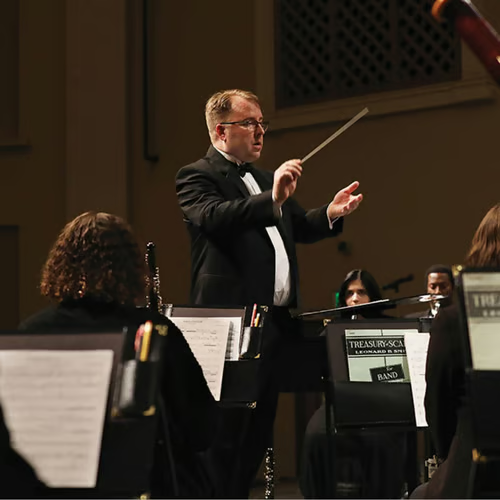
March 1-31

National Music in Our Schools Month

A cultural observance in March advocating for quality music education programs in schools and highlighting the value of music learning.

Yearly Date
All of March
Observed in
United States
Category
School
Founding Entity

New York State School Music Association (NYSSMA)

First Observed
1973
Origin

Institutional Initiative

NYSSMA started Music In Our Schools as a March 14, 1973 event and expanded it nationally with MENC/NAfME support into a month-long observance.

Institutional Record
Holiday Calendar
Last updated February 26, 2026 by the Holiday Calendar Team
Have an update or spot an error?

Introduction

March is not only the beginning of spring, but it's also National Music in Our Schools Month! This month-long celebration was created by the National Association for Music Education to raise awareness about the importance of music education in schools. Studies have shown that learning and playing music can have numerous benefits, including improved academic performance and enhanced creativity. So let's take a moment to appreciate all the talented music teachers and students who make our schools a more harmonious place. And don't forget to turn up your favorite tunes and celebrate this special month with some good vibes!

National Music in Our Schools Month Timeline

1800s
Introduction of Music in Schools
The late 1800s saw music classes being integrated into school curricula in the United States, mainly teaching singing.

1934
Establishment of MENC
The Music Educators National Conference (MENC), now the National Association for Music Education (NAfME), was established to advance music education.
1961
ESEA Inclusion
The Elementary and Secondary Education Act (ESEA) included arts as part of the core curriculum, emphasizing the importance of music education.
1985
First Music In Our Schools Day
Recognized by the NAfME, the first ever "Music In Our Schools Day" was marked to highlight the significance of music in schools.
1989
Extension to Music In Our Schools Month
Due to its popularity, the event was extended from a single day to a month-long celebration known as "Music In Our Schools Month".
2002
No Child Left Behind Act
The No Child Left Behind Act reinforced the role of music as an important academic subject, further endorsing music education.

How to Celebrate National Music in Our Schools Month

1

Attend a school music concert

Support your local schools by attending a music concert put on by students and teachers. Not only will you get to enjoy some great music, but you'll also be showing your appreciation for music education.

2

Create a playlist of songs from your school days

Take a trip down memory lane by creating a playlist of songs that were popular during your school days. Share it with friends and reminisce about the good old days.

3

Write a thank you letter to a music teacher

Take the time to thank a music teacher who has made an impact on your life. Write them a heartfelt letter expressing your gratitude and appreciation for their dedication to teaching music.

4

Attend a music workshop

Expand your musical knowledge by attending a music workshop or seminar. You may learn a new instrument or technique, and meet other music enthusiasts in the process.

5

Support a school music program

Donate to or volunteer with a local school's music program. Your support can make a huge difference in providing resources and opportunities for students to learn and appreciate music.

Why National Music in Our Schools Month is Important

A

Music education helps develop critical thinking skills

Studying music requires students to analyze and interpret concepts, patterns, and emotions. This can help them develop critical thinking skills that are useful in all aspects of learning.

B

Music education promotes creativity and self-expression

Learning and creating music allows students to express themselves in a unique way that may not be possible in other subjects. This can boost self-esteem and encourage individuality.

C

Music education can improve academic performance

Studies have shown that incorporating music into the curriculum can improve academic performance in areas such as math, science, and reading. It also encourages teamwork and discipline, which are important skills for success in school and beyond.

Holiday Dates

Year Dates Days
2023 Wednesday to Friday
2024 Friday to Sunday
2025 Saturday to Monday
2026 Sunday to Tuesday
2027 Monday to Wednesday