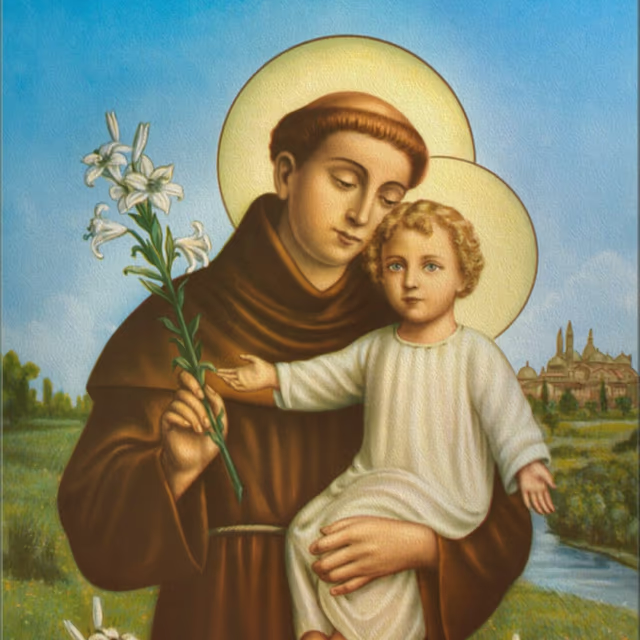

Anthony's name day is centuries older than this observance and belongs to two saints: January 17 for Anthony the Great, and June 13 for Anthony of Padua, which Lisbon still keeps as a municipal holiday. National Anthony Day is the newcomer. It circulates on holiday-listing calendars with a May 12 date, and no source records who chose it or why.
CHAPTER 01
The hermit and the friar
Two men gave the name its feast days. Anthony the Great was born around 251 in Middle Egypt and is counted as the founder of organized Christian monasticism. The church fixed his feast on January 17.
The Life of St. Antony, written by St. Athanasius, compiled his teachings. His desert temptations went on to become a subject for Hiëronymus Bosch and later for Salvador Dalí.
The second Anthony chose the name himself. Fernando Martins de Bulhões joined the Franciscans in 1220 and took Anthony in honour of the Egyptian hermit.
He died in 1231 and was canonized the year after. That gave the calendar a second Anthony feast, on June 13, the date of his death. Seven centuries later Pius XII declared him a doctor of the church.
The legends stuck to him as well. A novice stole his psalter and Anthony prayed for the return of both the book and the thief, which is why he is still invoked for the return of lost property.