Holiday Calendar
Your holidays

Hungary National Day

Next celebratedFriday, August 20, 2027

Hungary's kings were once bound by charter to keep 20 August at Székesfehérvár and hear their subjects' complaints there. The date is now the country's official state holiday, and it closes with fireworks over the Danube.

Countdown to the day
--DAYS
--HRS
--MIN
--SEC
Have an update or spot an error?
YEARLY DATEAugust 20
OBSERVED INHungary
CATEGORYCulture
SUBCATEGORYCivics
ORIGIN

Enacted Law

FOUNDING ENTITY
National Assembly of Hungary
FIRST OBSERVED
1938
“Act VIII of 1991 gave the date back by repealing the 1950 decree that had made it the People's Republic's holiday.
HOW THE HOLIDAY CAME TO BE

Three regimes wrote their own law for one date.

Hungary's parliament first put the day in statute with Act XXXIII of 1938, which declared 20 August a national holiday in memory of King Saint Stephen, whose remains were raised to the altars at Székesfehérvár on that date in 1083. Act VIII of 1991 restored the observance after four decades as a communist state holiday and made 20 August the official state holiday of the republic.

Read Act VIII of 1991via Hungarian National Assembly
INTRO

An agriculture minister invented the day's oldest looking ritual

A loaf of the new harvest is cut, blessed and handed over somewhere in the programme of Hungary National Day. Of everything on the bill, it looks like the oldest thing there.

It is not. The ethnographer Ákos Kovács traced the ritual to an 1899 decree by agriculture minister Ignác Darányi, who pushed the revival of harvest festivals to quiet the agrarian unrest of the late 1800s and to repair what the decree called patriarchal good relations between landlord and harvesters. For decades the bread belonged to the midsummer harvest dates and had nothing to do with 20 August.

The Communist Party moved it onto 20 August in the 1940s, in what Telex describes as a search for a secular way to hold a saint's feast. Kovács set out to explain how a tradition invented from above became, in national memory, an ancient one. The regime that moved the loaf is gone, and the loaf is still there.

Advertisement
ORIGINS

Hungary National Day history

INTRODUCTION

Every year on the national holiday a mummified right hand is carried through Budapest. It belonged to a king who died in 1038, and where it has been allowed to go maps two centuries of Hungarian politics.

The procession was banned after the 1848-49 war of independence and not held again until 1860. It was called off in 1944 and banned once more in 1948.

CHAPTER 01

A grave that would not open

Stephen I died on 15 August 1038. Forty-five years and five days later, under King Ladislaus I, he was canonised at Székesfehérvár.

The one detailed account is a legend written by Bishop Hartvik at King Coloman's order, and Hungary's own state research institute warns it is politically motivated. In it the tomb will not open until a nun called Karitas tells the king his labour is wasted while his cousin Salomon sits in a cell. Salomon was freed, the stone lifted as though weightless, and the Holy Right was not with the body.
CHAPTER 02

The day the crown had to answer

The Synod of Szabolcs prescribed the observance for 20 August in 1092, and the royal gatherings moved onto it. A charter of Béla III from 1181 has the king keeping the feast at Fehérvár, hearing out the canons of Zagreb and putting their grievance right.

By 1222 the habit was law. The first article of Andrew II's Golden Bull binds the king to keep Saint Stephen's day at Székesfehérvár and lets any noble who wishes gather there. Attila Zsoldos notes that the charter wrote down an existing practice rather than inventing one.

It hardened, then faded. From the 1270s the assemblies drifted away from the town and away from the date.

CHAPTER 03

Three laws, one date

Emperor Francis I turned the church feast into a state holiday. For the ninth centenary of Stephen's death a separate statute moved both houses of parliament to a town hall courtyard in Székesfehérvár, with one item of business. The law they made there declared 20 August a national holiday in memory of King Saint Stephen.

It lasted twelve years. A law-decree of 1950 handed the date to the People's Republic and its new constitution, and the saint went unmentioned.

Act VIII of 1991 gave it back and made this one the official state holiday. Its closing section struck that decree out alongside the ones for 4 April and the October Revolution anniversary.

TIMELINE

Timeline

Stephen raised to the altars

King Ladislaus I had Stephen I's remains lifted at Székesfehérvár on 20 August, forty-five years and five days after the king's death.

The Golden Bull's first article

Andrew II's charter of liberties opens by binding the king to keep Saint Stephen's day at Székesfehérvár each year.

First Holy Right procession

The mummified right hand of Saint Stephen was carried through Buda Castle for the first time, with Archduke Joseph setting the rules a year later.

Fireworks join the programme

The evening display became a recurring fixture, fired from Gellért Hill at ten o'clock, and watching it from a pleasure boat was fashionable.

Parliament moves to Székesfehérvár

Both houses were moved out of Budapest by statute and sat in a town hall courtyard with a single item on the agenda.

Restored as the state holiday

Act VIII named Hungary's three national holidays and singled out 20 August as the official state holiday of the republic.

BY THE NUMBERS

Hungary National Day by the Numbers

11
Statutory public holidays in Hungary
800,000
Marchers, 1938 Holy Right procession
45,000+
Pyrotechnic effects, 2024 Budapest show
10.3bn HUF
Net state spend, 2022 four-day programme

GOOD TO KNOW

Surprising facts about Hungary National Day

A councillor said nobody would travel to see the fireworks

At a session of the Budapest city committee in the mid-1930s a member said he did not believe anyone would travel to the capital from 500 to 1,500 kilometres for the Gellért Hill display. The following year 200,000 people watched it, and the city archives note the gate money that year exceeded the entire cost of the celebration.

By the numbers the 2006 storm was not an extreme one

Comparing its radar reflectivity and lightning against other severe storms, the Hungarian Meteorological Service's own peer-reviewed post-mortem found the 2006 supercell was not an extreme event. What set it apart was the extreme speed at which the cell moved.

No king named a son for Stephen until Coloman

In the forty-five years between Stephen's death and his elevation every Hungarian king was crowned at Székesfehérvár as he had been, yet not one was buried beside him and not one gave a son his name. King Coloman was the first to do both.

Imre Nagy greeted the same date two ways

As agriculture minister in 1946 he welcomed the new bread festival. By 1951, as collection minister, he was greeting 20 August as the first deadline for compulsory produce delivery and the day of calling to account, warning that the government punished those who failed their duty.

The fireworks are staged like a play

The company that runs the display described the 2024 show as seven acts linked by a historical audio play, with the score composed on Hungarian folk songs. It was fired from three Danube bridges, nine barges and a number of pontoons.

WHY THIS DAY MATTERS

Why We Love Hungary National Day

SOVEREIGNTY

One date in the basic law, named as the state's own.

Hungary's Fundamental Law lists three national holidays and then singles out one of them, stating that the official state holiday shall be the 20th day of August. It is the only date the Fundamental Law designates that way.

SCRUTINY

What the day costs is a public argument

The state tourism agency first refused a freedom of information request for the 2022 figures, saying they were data serving the preparation of a decision and would not be public for ten years, then published a tally of its own. A Publicus Intézet survey for Népszava found eight in ten respondents believed the money spent on the fireworks could be put to better use.

RISK

The launch decision has cost lives and jobs

In 2006 a supercell reached the crowd on the Danube embankments soon after the display began and five people died, though the meteorological service had issued its red level warning in time and attributed the failure to communication between the responsible bodies. In 2022 the show was pushed back a week on a storm forecast that did not verify, and the head of the National Meteorological Service and her deputy were dismissed.

GET INVOLVED

How to Celebrate Hungary National Day

EDITOR'S PICK

Watch the Holy Right procession

The mummified right hand of Saint Stephen is carried through the streets of Budapest, and the procession has been held on this date every year since 1989. Pope John Paul II joined it in 1991, when the relic travelled to Heroes' Square by papamobile.

TURN

Turn up early on Kossuth Lajos Square

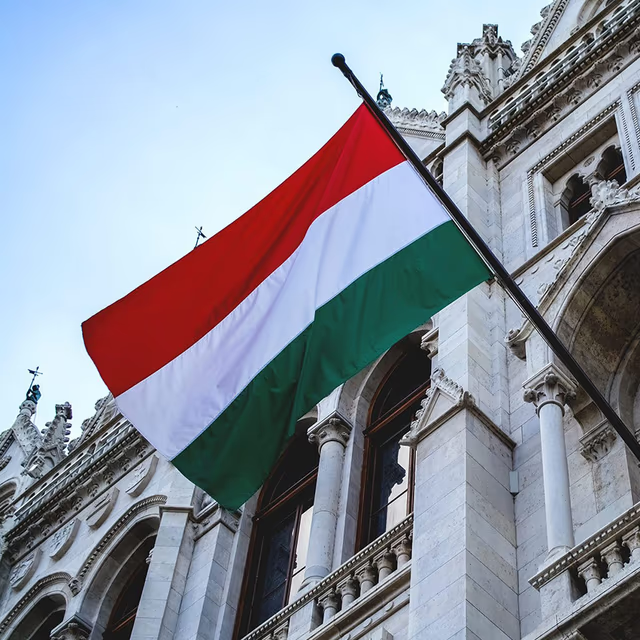
The state ceremony opens with the national flag raised under military honours in front of Parliament, followed by the commissioning of the year's new officers. The President also presents the Order of Saint Stephen, which the head of state describes as Hungary's highest honour.

TASTE

Taste the bread and the cake of the country

The Magyar Ízek Utcája runs between the Chain Bridge and Döbrentei tér and serves both the Ország kenyere and the Ország tortája. The street sets out the food cultures of the Carpathian Basin, with healing plants, spices and drinks alongside them.

PICK

Pick a spot along the Danube

The evening display runs over a stretch of about five kilometres from Petőfi Bridge to the lower third of Margaret Island, with drones and light painting alongside the pyrotechnics. The organisers say the view is roughly the same from every point on that stretch, so the far end is as good as the middle.

GET

Get inside the buildings that open for the day

Recent programmes have opened the Karmelita and the backstage of Parliament to visitors, and run the Mesterségek Ünnepe folk art festival in Buda Castle. There is an air parade over the Danube during the day, hours before the evening show.

Test your knowledge

How well do you know Hungary National Day?

1 / 8

What did the Golden Bull of 1222 require the Hungarian king to do on Saint Stephen's day?

Answer

Yes. Hungary's Labour Code lists it among the statutory non-working days, so it is a day off across the country.

COLOPHON

Sources

How we know what’s on this page. References, not endorsements.

17sources
8primary records
15independently dated
Primary records
Hungarian National Assembly1991-03-14
1991. évi VIII. törvény a Magyar Köztársaság állami ünnepéről
The promulgated text of Act VIII of 1991, which names Hungary's three national holidays, declares 20 August the official state holiday, and repeals the 1950 law-decrees on 20 August, 4 April and the October Revolution anniversary.
View source
Hatályos Jogszabályok Gyűjteménye1938
1938. évi XXXIII. törvény Szent István király dicső emlékének megörökítéséről
Act XXXIII of 1938, the first statute to declare 20 August a national holiday in memory of King Saint Stephen, passed by both houses of parliament sitting together at Székesfehérvár.
View source
Hatályos Jogszabályok Gyűjteménye
2012. évi I. törvény a munka törvénykönyvéről
Section 102 of Hungary's Labour Code, listing the eleven statutory non-working days of the year, with 20 August among them.
View source
Venice Commission, Council of Europe
Fundamental Law of Hungary, Article J
The English text of the constitutional article naming Hungary's three national holidays and designating 20 August as the official state holiday.
View source
Hungarian Government2024-08-01
Több száz programmal várják az érdeklődőket
The official announcement of the 2024 programme, including the fireworks organiser's own description of the show's scale, its seven acts and its folk-song score.
View source
Office of the President of Hungary2025-08-20
20 August is the celebration of sovereign Hungarian statehood
The head of state's account of the 2025 ceremony, covering the flag raising on Kossuth Lajos Square, the commissioning of new officers and the award of the Order of Saint Stephen.
View source
IDŐJÁRÁS, Quarterly Journal of the Hungarian Meteorological Service2007
The Constitution Day storm in Budapest: Case study of the August 20, 2006 severe storm
The peer-reviewed reconstruction of the 2006 disaster, recording five deaths and hundreds of injuries and concluding that the storm was not extreme by radar and lightning measures but exceptionally fast moving.
View source
Beszélő2004
Az Új Kenyér ünnepe
Ákos Kovács's study tracing the new bread festival to Ignác Darányi's 1899 decree reviving harvest festivals, written to disprove the widely held belief that the ritual was created in 1949 on a Soviet model.
View source
Additional coverage
ELTE Institute of History2022-03-09
Aranybulla 800: a székesfehérvári gyűlés
Attila Zsoldos on the Golden Bull's first article, the charters of 1151 and 1181 showing the Székesfehérvár law day already in use, the 1092 Synod of Szabolcs, and how the obligation was rewritten in 1231, 1267 and 1290.
View source
Székesfehérvár Városportál2025-08-20
1083. augusztus 20-án avatták szentté I. István királyt Székesfehérváron
The city's history research centre on the 1083 elevation, the gap of forty-five years and five days after Stephen's death, Hartvik's dating of the ceremony, and the kings who followed him without naming a son for him.
View source
Magyarságkutató Intézet2023-08-20
István király szentté avatása és a Szent Jobb
The state research institute's account of Hartvik's legend, its warning that the text is politically motivated, and the disputed history of the Holy Right relic.
View source
Pestbuda2020-08-20
A holiday missed: the colourful history of Processions of the Holy Right
The full record of the Holy Right processions, from the first in Buda in 1818 through every ban and cancellation to the annual procession held since 1989, including the 800,000 who marched in 1938.
View source
Budapest City Archives2026-08-20
Levéltári egyperces 2026/33. Viták a régi augusztus 20-i tűzijátékokról
The archive's account of the interwar arguments over the fireworks, quoting the city committee debate from the contemporary press and recording the 200,000-strong audience whose gate money exceeded the whole celebration's cost.
View source
Telex2023-08-20
Aratólázadás, Horthy, Rákosi és Kádár: mi köze az új kenyérnek Szent Istvánhoz?
How the Communist Party moved the bread festival onto 20 August in the 1940s, the timing of the 1949 constitution, and Imre Nagy's two speeches on the date five years apart.
View source
Átlátszó2023-02-28
A tűzijáték 3,2 milliárd, az összes augusztus 20-i program bő 10 milliárd forintba került
The freedom of information fight over the 2022 figures and the state tourism agency's own published tally of net 10.3 billion forint for the four-day programme.
View source
Fox Weather2022-08
Hungarian weather officials fired after 'inaccurate' forecast
The 2022 postponement of the display to 27 August and the dismissal of the head of the National Meteorological Service and her deputy after the forecast storms failed to arrive.
View source
Economx2026-08-19
Rövidebb tűzijáték, kisebb számla: ennyit spórol a kormány augusztus 20-án
The 2026 programme and the Publicus Intézet survey for Népszava finding that eight in ten respondents thought the money spent on the fireworks could be better used.
View source
FOR MARKETERS & CREATORS

Turn every day into a moment your audience actually shows up for.

8.4M
Monthly readers
5K+
Holidays tracked