
Holiday Calendar
57 saved#3,210 of 6,224

Old New Year’s Day

A heritage observance on March 25 marking the Feast of the Annunciation, the historical English legal new year, spring renewal, and the start of the agricultural season.

Thursday
25
March 2027
Last updated February 26, 2026 · by the Holiday Calendar Team
Have an update or spot an error?
YEARLY DATEMarch 25
OBSERVED INInternationally
CATEGORYCulture
SUBCATEGORYCivics
ORIGIN

Historical Origin

FOUNDING ENTITY
Not documented
FIRST OBSERVED
Not documented
HOW THE HOLIDAY CAME TO BE

March 25 (Lady Day, the Feast of the Annunciation) was observed as the legal start of the new year in England from 1155 until 1752, when the Calendar Act 1750 changed the new year to January 1. The specific legislation establishing this in 1155 is not identified in historical sources.

News Archivevia en.wikipedia.org
INTRO

Introduction

Get ready to celebrate Old New Year's Day on March 25! While most people are used to celebrating the New Year on January 1st, some cultures also recognize March 25th as the beginning of a new year. This tradition dates back to ancient times and is still celebrated in several countries around the world. It's a time for fresh starts, setting new goals, and embracing change. So why not join in on this unique celebration and start your year off with a bang? You never know what exciting opportunities and adventures await you in the coming months!

Advertisement

TIMELINE

Old New Year’s Day Timeline

Julian Calendar Initiated

Julius Caesar implemented the Julian calendar, with the year beginning on January 1st, moving away from the old system with the new year starting in March.
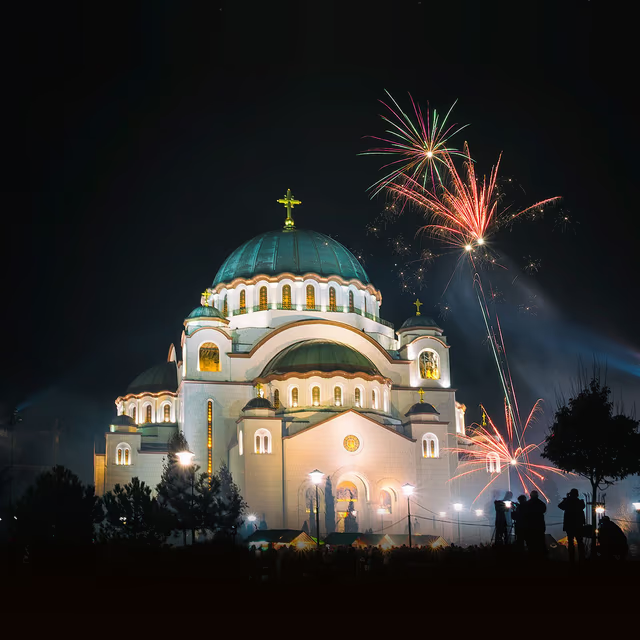

Introduction of the Gregorian Calendar

Pope Gregory XIII introduced the Gregorian calendar which was more accurate than the Julian calendar, and swiftly started being adopted by many European countries.

Britain (and colonies) Adopts Gregorian Calendar

Britain and its colonies adopted the Gregorian calendar, shifting New Year's Day from March 25th to January 1st. The 'Old' New Year thereby becoming a cultural celebration.

Soviet Russia Adopts Gregorian Calendar

Soviet Russia transitioned to the Gregorian calendar, causing many Orthodox Churches to observe two New Years: the Gregorian and Julian or 'Old' New Year.

Continuing Celebrations

Old New Year’s Day continues to be observed around the world as a cultural holiday, particularly in places with strong ties to Orthodox faiths and English heritage.

GET INVOLVED

How to Celebrate Old New Year’s Day

EDITOR'S PICK

Host a themed party

Make the most of Old New Year's Day by hosting a themed party, such as a Roaring Twenties or Great Gatsby party. Encourage guests to dress up and serve traditional dishes from different cultures to honor the holiday's international roots.

WATCH

Watch the sunrise

Start off the day by watching the sunrise with loved ones. This can be a peaceful and reflective way to celebrate the new year and appreciate the beauty of nature.

GIVE

Give back to the community

Spread joy and kindness on Old New Year's Day by volunteering at a local charity or organizing a donation drive for a cause that is important to you. This is a great way to start the new year on a positive note and make a difference in your community.

PLAN

Plan a day of self-care

Take some time for yourself and prioritize self-care on this special day. This could include a relaxing spa day, trying out a new hobby or activity, or simply indulging in your favorite foods and activities.

VISIT

Visit a cultural landmark

Explore the history and traditions behind Old New Year's Day by visiting a cultural landmark, such as a museum or historical site. This can be a fun and educational way to celebrate the holiday.

WHY THIS DAY MATTERS

Why We Love Old New Year’s Day

It's a time for reflection and new beginnings

As we enter into a new year, Old New Year's Day allows us to reflect on the past year and set intentions for the upcoming one. It's a day to look back on our accomplishments, learn from our mistakes, and make plans for the future. Plus, it's a reminder to cherish the passing of time and embrace new beginnings.

It's a unique and lesser-known holiday

Most people are familiar with New Year's Day on January 1st, but not many are aware that there is a second New Year celebration on January 14th. Celebrating Old New Year's Day makes you feel like you're in on a secret holiday that not many people know about!

It's a chance to extend the festive season

After the hectic holiday season, it can be nice to have one more day to relax and enjoy the company of loved ones. Old New Year's Day provides the perfect opportunity to continue celebrating and spreading joy.

FOR MARKETERS & CREATORS

Turn every day into a moment your audience actually shows up for.

8.4M
Monthly readers
5K+
Holidays tracked