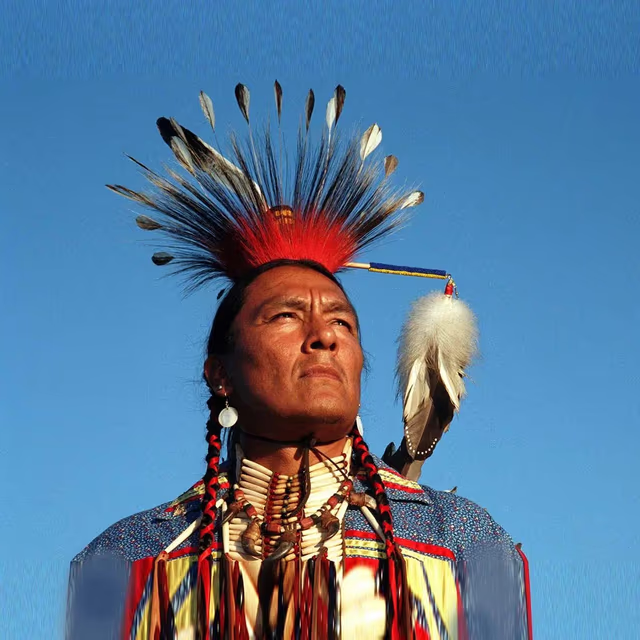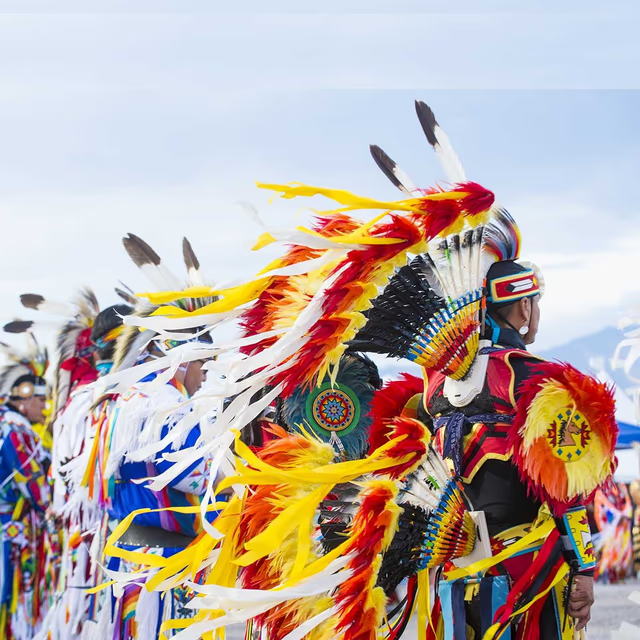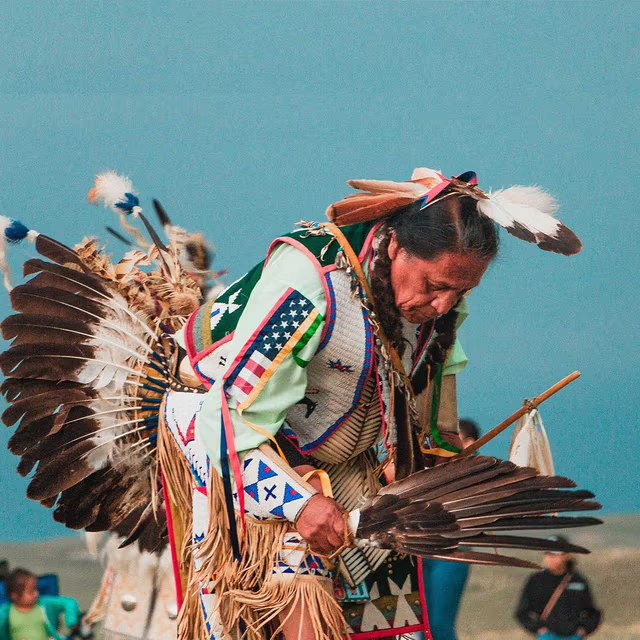

On August 3, 1990, President George H. W. Bush signed House Joint Resolution 577 (Public Law 101-343), designating November 1990 as National American Indian Heritage Month, the first time the federal government set aside a full month. He carried out the resolution with Presidential Proclamation 6230 on November 14, 1990, and in 1991 Public Law 102-123 made the November observance recurring.
CHAPTER 01
A 4,000-mile ride and a proclamation
In the spring of 1914, the Reverend Red Fox James, whose tribal identity the Bureau of Indian Affairs records as undetermined, began a roughly 4,000-mile trek on horseback to Washington to petition the President for an "Indian Day." The standard account holds that on December 14, 1915, he presented the endorsements of 24 governors at the White House.
That same year, the Reverend Sherman Coolidge, an Arapaho leader, issued a proclamation declaring the second Saturday of each May "American Indian Day." His appeal also called for the citizenship of American Indians, a claim that would not be answered until 1924.