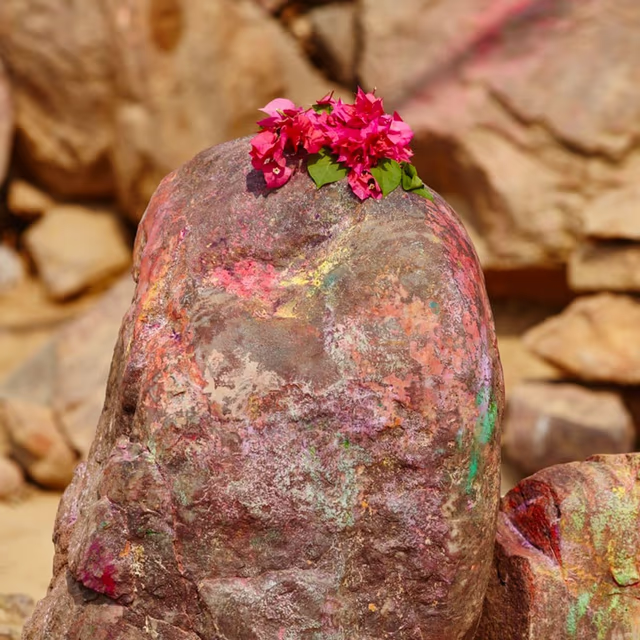

No founder, founding act or first observance is documented for Harela, an agrarian custom of the Kumaon hills tied to the sun's entry into Cancer. The earliest description found is in E.T. Atkinson's gazetteer of the Himalayan districts, printed in 1884, which names the day and describes seeds sown in a basket of earth, clay images of Shiva and Parvati, and the cutting of the green shoots.
CHAPTER 01
Not one festival but three
The July celebration is the one that is still widely kept. A scientist at the G.B. Pant National Institute of Himalayan Environment records two more, a Chaitra Harela in March or April and an Ashwin Harela in October or November, each pinned to a different moment in the farming year.
Those two are now kept far less often. The same account attributes the decline to changing cropping choices, from food grains to fruit, to climate uncertainty that disrupts the traditional sowing schedules, and to knowledge that has not passed down the generations.