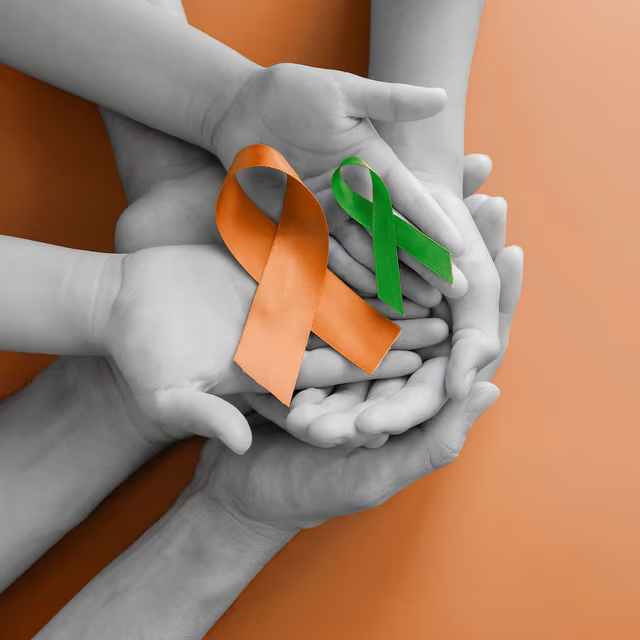
Awareness month in September to raise public awareness of blood cancers and encourage education, research support, and patient advocacy.
U.S. House of Representatives
Legislative Resolution
In 2010, the U.S. House of Representatives agreed to H.Res.1433, expressing support for designating September 2010 as Blood Cancer Awareness Month.
Blood Cancer Awareness Month is observed each September to raise awareness of cancers that affect the blood, bone marrow, and lymphatic system, including leukemia, lymphoma, and myeloma. Because these cancers do not always form a single, visible tumor, they are often first noticed through symptoms like unusual fatigue, frequent infections, easy bruising, swollen lymph nodes, or abnormal blood counts. Throughout September, medical and advocacy organizations share practical information on warning signs, diagnosis, treatment options, and the role of clinical trials, while also highlighting the long-term needs of patients and survivors.
Blood cancers affect the blood, bone marrow, and lymphatic system. Long before modern treatments, physicians could recognize these illnesses but did not understand their causes.
In the early 1800s, medicine began separating blood and lymph diseases from infections. In 1832, Thomas Hodgkin described patients with enlarged lymph nodes and spleen, work that later helped define Hodgkin lymphoma. As microscopes and lab medicine improved, doctors could study blood cells directly. In 1847, Rudolf Virchow introduced the term leukemia, defining it as a distinct disease based on abnormal blood findings.
For much of the 1800s and early 1900s, blood cancers were hard to diagnose early and even harder to treat. A turning point came in 1948, when Sidney Farber and colleagues reported temporary remissions in children with acute leukemia using an early chemotherapy drug. It was not a cure, but it showed treatment could push the disease back and helped launch the chemotherapy era.
As research advanced, progress increasingly depended on organized clinical trials and long-term investment. In the United States, the National Cancer Act was signed on December 23, 1971, strengthening the federal cancer research system and supporting advances across cancer types, including blood cancers.
Blood Cancer Awareness Month fits into this broader context of research and public education. It received a federal marker in 2010: H.Res. 1433 was introduced on June 10, 2010, and the U.S. House agreed to it on September 22, 2010, supporting September 2010 as Blood Cancer Awareness Month and emphasizing public understanding, research, and clinical trials.
After 2010, the observance became a recurring September effort led by advocacy and medical organizations. The Lymphoma Research Foundation says it has led Blood Cancer Awareness Month efforts since 2010 and launched Light It Red for Lymphoma in 2011, expanding to 100+ participating buildings and landmarks by 2017. September also includes World Lymphoma Awareness Day on September 15, a global awareness date that often anchors mid-month education.
Organizing a blood drive is an effective way to raise awareness and provide a valuable service. Contact your local blood bank and ask how you can get involved.
Check out local cancer awareness walks and participate in them to show your support. Many of these events are free, but donations are always welcome.
Volunteering with a cancer charity is an excellent way to make a difference during Blood Cancer Awareness Month. Check out your local charities and see how you can help.
Learn more about blood cancer by attending lectures, reading books, or listening to podcasts. The more you know, the better equipped you will be to talk about it.
Make a donation to a blood cancer charity of your choice. Every little bit helps and will go towards helping those fighting this disease.
Blood Cancer Awareness Month serves to bring attention and raise awareness of different forms of blood cancer, such as leukemia, lymphoma, and multiple myeloma. By spreading the word about these cancers, people can become more aware of the signs and symptoms associated with them, and thus be better equipped to seek treatment if needed.
By recognizing Blood Cancer Awareness Month, we are able to come together to help provide support and resources to patients who are fighting blood cancers. Organizations like the Leukemia & Lymphoma Society and Be The Match exist to offer assistance to those who need it most.
The awareness generated by Blood Cancer Awareness Month helps fund important initiatives in research and development that result in improved treatments or potential cures for these devastating diseases. We owe a debt of gratitude to those tireless researchers working day and night to improve upon existing treatments so that more lives can be saved.