Holiday Calendar
0 saved#5,801 of 6,224

Semana Santa Spain

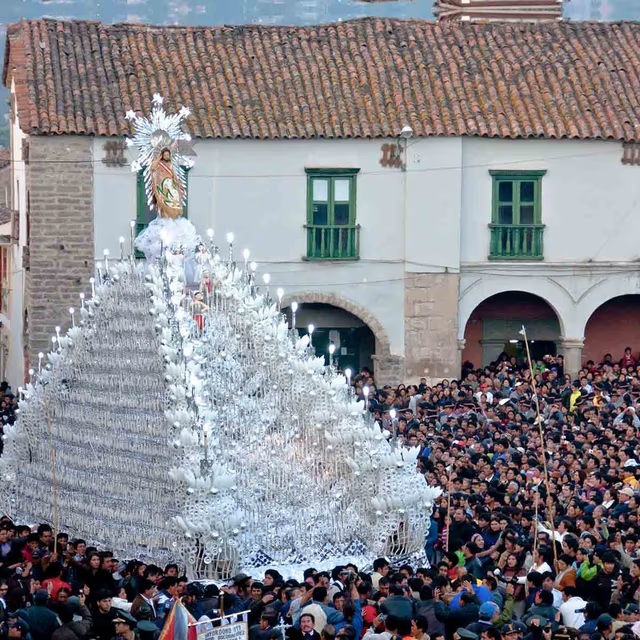
A religious observance during Holy Week featuring solemn street processions with elaborate floats commemorating the Passion, Death, and Resurrection of Jesus Christ.

Sunday
21–27
March 2027
Last updated February 26, 2026 · by the Holiday Calendar Team
Have an update or spot an error?
YEARLY DATEPassion Week (Western Easter − 7, 7d)
OBSERVED INSpain
CATEGORYReligion
SUBCATEGORYChristian
ORIGIN

Religious Origin

FOUNDING ENTITY
Not documented
FIRST OBSERVED
Not documented
HOW THE HOLIDAY CAME TO BE

Semana Santa processions in Spain developed from medieval Catholic brotherhood traditions to publicly commemorate Holy Week, with no single founder.

+ Know the story? Submit a founder Help us complete this holiday
INTRO

Introduction

Get ready to immerse yourself in one of Spain's most profound and beautiful traditions, Semana Santa, which kicks off on March 24. Known as Holy Week, Semana Santa allows you to step back in time and experience the depth of Spain's religious heritage. This centuries-old tradition, dating back to the Middle Ages, brings the passion and drama of the Easter story vividly to life. For a whole week, breathtaking processions fill the streets of practically every city and town in Spain, a truly spectacle of faith and artistry you cannot miss! So, join in this unique and spiritual celebration. Allow the rhythm of the marchas, or procession music, to transport you on this incredible journey of faith and tradition. It's time to unleash your spirit in the awe-inspiring Semana Santa!

Advertisement

TIMELINE

Semana Santa Spain Timeline

Origins of Semana Santa

Semana Santa processions began in the Middle Ages when churches used them to educate followers about the story of the Passion of Christ.

Catholic Fraternities Established

Catholic fraternities, who play a prominent role in the processions, were established, formalizing the processions we see today.

Spain's Golden Age Impact

During Spain's Golden Age, religious artwork and craft used in the processions further evolved, adding to the richness of the Semana Santa traditions.

Civil War Interruption

Spain's Civil War put a stop to the processions. Semana Santa traditions resumed following the end of the war.

Increased International Interest

From the 1980s, international interest in Spain's Semana Santa grew, with many tourists flocking to experience the processions every year.

UNESCO Recognition

Some Semana Santa processions, like those in Seville, were recognized by UNESCO as a cultural heritage of humanity.

GET INVOLVED

How to Celebrate Semana Santa Spain

EDITOR'S PICK

Attend a processional

During the week of Semana Santa, towns and cities across Spain have religious processions. The week begins with Palm Sunday and culminates on Easter Sunday. Each day, huge floats bearing religious icons are carried through the streets, accompanied by locals dressed in traditional Easter attire. These processions can last all night, and are a must-see spectacle.

TRY

Try traditional foods

During Holy Week in Spain, it's traditional to indulge in a plethora of unique foods. You can try dishes such as Torrijas (a type of Spanish French toast), Potaje de Vigilia (a chickpea and spinach stew traditionally eaten on Good Friday), and Hornazo (a meat-filled pastry).

VISIT

Visit historic Churches

Many churches in Spain open their doors during Semana Santa for visitors to view their sacred art and stunning interiors. This is also an opportune time to witness the striking altar displays made specifically for Holy Week.

EXPERIENCE

Experience the night processions

Perhaps the most impressive of all Holy Week celebrations are the night processions. In Seville, the processions of 'La Madrugá' take place in the early hours of Good Friday until dawn, an unforgettable spectacle filled with devotion and beauty.

PARTICIPATE

Participate in "Los Picaos"

In the town of San Vicente de la Sonsierra in La Rioja, you can witness the ancestral tradition of "Los Picaos", a unique blood penance practiced only here. Volunteers subject themselves to be lightly whipped, as a demonstration of faith and penance. Remember, participation is completely voluntary and most often, visitors simply observe.

WHY THIS DAY MATTERS

Why We Love Semana Santa Spain

Experience Unique Local Traditions

The unique local traditions that come with Semana Santa offer you a genuine insight into Spain's culture and history. Whether it's the night processions of 'La Madrugá' in Seville or the penance practice of "Los Picaos" in La Rioja - each with its own significance and charm, these experiences would truly be memorable.

Witness mesmerizing religious processions

There's nothing quite like the processions of Semana Santa in Spain. The elaborate floats, costumes, and the atmosphere of reverence create a spectacle that is deeply moving and visually stunning. It's a unique chance to not only witness, but also become part of a centuries-old tradition.

Delight in special Easter Foods

The holiday of Semana Santa is not just about the religious observance but also about enjoying the traditional foods of Spain. From torrijas, a type of Spanish French toast, to Potaje de Vigilia, a chickpea and spinach stew traditionally eaten on Good Friday - this is a food lover's dream come true!

FOR MARKETERS & CREATORS

Turn every day into a moment your audience actually shows up for.

8.4M
Monthly readers
5K+
Holidays tracked