Holiday Calendar
274 saved#589 of 6,224

National Tabby Day

A fun observance on April 30 celebrating the tabby coat pattern in cats, its distinctive markings, its genetics, and the folklore around it.

Friday
30
April 2027
Last updated February 7, 2026 · by the Holiday Calendar Team
Have an update or spot an error?
YEARLY DATEApril 30
OBSERVED INInternationally
CATEGORYAnimals
SUBCATEGORYCats
ORIGIN

Community Origin

FOUNDING ENTITY
Not documented
FIRST OBSERVED
Not documented
HOW THE HOLIDAY CAME TO BE

A day for a pattern, with no documented author.

The origin of National Tabby Day is undocumented. No proclamation, registry filing, or first-party founder statement records who created the April 30 observance or exactly when. It surfaces in cat-blog and shelter coverage from around 2016, and accounts of who started it conflict, so no single founder can be confirmed.

+ Know the story? Submit a founder Help us complete this holiday
INTRO

Why every cat in the world is secretly a tabby

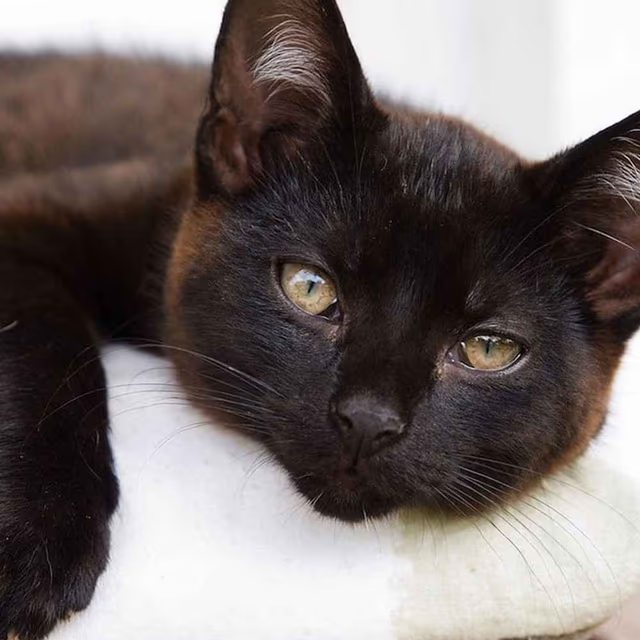
Look at a solid black cat in bright sun and you may catch faint stripes ghosting through the coat. They are not a trick of the light. Every domestic cat carries a full tabby pattern, written into its genes, whether or not you can see it.

National Tabby Day celebrates the most common look in the cat world, and the strangest thing about it is how universal it is. A recessive gene called non-agouti can paint every hair a single uniform color, hiding the stripes.

Switch that gene the other way and the tabby pattern reappears. The black cat had it all along.

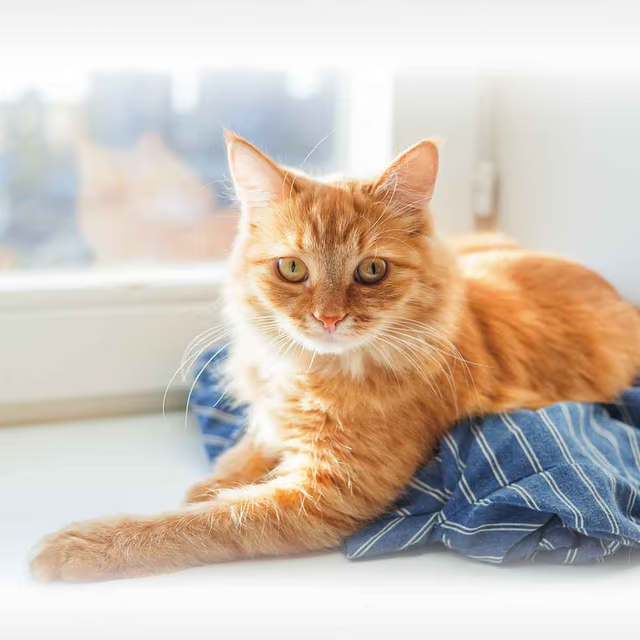
So this is a day about a pattern, not a breed. The tabby is the marbled ginger on the windowsill and the striped gray under the porch, and the genetics behind that look reach from a Baghdad silk market to a wild cheetah.

Advertisement
ORIGINS

Tabby Day history

INTRODUCTION

The cats came long after the cloth. The word tabby started its life in a Baghdad textile market, and the path from a bolt of silk to a striped house cat runs through several centuries and three languages.

The puzzle of the day is the opposite of most holidays. The pattern it honors is ancient and everywhere, while the observance itself is recent and barely documented. The story worth telling is the pattern's, not the date's.

CHAPTER 01

A fabric named for a district

In medieval Baghdad, a quarter called Al-Attabiya made a prized striped silk taffeta known as attabi. The district was said to be named for an Umayyad prince, Attab, though that detail comes down as tradition rather than record.

The cloth traveled west, and so did its name. It passed into Medieval Latin as attabi and into French as tabis, a rich watered silk. English borrowed the word in the early 1600s, still meaning the fabric and nothing about cats.

Then the metaphor took hold. A striped, shimmering cat looked like a bolt of striped, shimmering cloth, and by the 1690s English speakers were calling such an animal a tabby cat. The fabric faded from everyday speech, but the cat kept the name.
CHAPTER 02

Folklore for the forehead M

Every tabby wears an M on its forehead, and people have explained it with stories for a long time. One Christian legend holds that a tabby warmed the infant Jesus in the manger, and a grateful Mary marked it with her initial.

An Islamic legend gives the credit to Muezza, a cat beloved by the Prophet Muhammad, the M a sign of favor. Both are folklore, not history. The mark is simply the standard agouti-tabby pattern that forms above the eyes on every tabby.

CHAPTER 03

The genetics catch up

Science eventually explained what the legends could not. In 2012, a team writing in the journal Science pinned down a gene, Taqpep, as the switch between the thin mackerel stripes and the wide classic swirls. Every classic tabby they tested carried the mutation in both gene copies.

That work also explained the day's deepest secret: a separate gene decides whether the pattern shows at all. The tabby look is the default for cats, and the modern observance, whoever first set it on April 30, is really a celebration of that default written into nearly every cat alive.

TIMELINE

Timeline

Baghdad's striped silk

A quarter of medieval Baghdad called Al-Attabiya becomes known for a striped silk taffeta named attabi, the cloth whose name will later become tabby.

The word enters English

English borrows tabby from French tabis and Latin attabi, but only for the watered silk fabric, not yet for any cat.

A cat called a tabby

The phrase tabby cat is first attested in English, comparing the animal's striped coat to the striped, shimmering cloth.

The mackerel switch found

Researchers identify the gene Taqpep as the switch between mackerel stripes and classic swirls, publishing the work in the journal Science.

National Tabby Day surfaces

The April 30 observance appears in cat-blog and shelter coverage, framed around celebrating tabbies; no single founder is documented.

Pattern traced to the embryo

A study shows the tabby blueprint is laid down in fetal skin via the DKK4 gene before any pigment forms.

GOOD TO KNOW

Surprising facts about National Tabby Day

Your couch cat shares a gene with a cheetah

The same Taqpep gene that swirls a classic tabby produces the rare king cheetah's blotches. The pattern was once so unusual it was thought to belong to a separate species of cheetah.

The pattern is set when the kitten is millimeters long

A 2021 study found the tabby blueprint is drawn in fetal skin by the DKK4 gene when the embryo is only two to three millimeters long, before any color exists.

A tabby can have no stripes at all

The ticked tabby, seen in the Abyssinian, carries the pattern as plain salt-and-pepper agouti hairs. It is fully a tabby, just without a single visible stripe on its body.

The cat became just a tabby by 1774

The word started as tabby cat, naming the coat after striped silk. Within a century English had shortened it, and a cat could be called simply a tabby on its own.

GOOD TO KNOW

Common Misconceptions

Tabby is a breed of cat.

Tabby is a coat pattern, not a breed. It appears across many recognized breeds and in countless random-bred cats, which is why two tabbies can look and behave nothing alike.

The M on a tabby's forehead comes from a religious blessing.

The stories about Mary and Muhammad are folklore. The M is the standard agouti-tabby marking that forms above the eyes on every tabby cat.

WHY THIS DAY MATTERS

Why We Love National Tabby Day

SCIENCE

One gene is the difference between stripes and solid.

The tabby coat is one of the clearest everyday demonstrations of how a single gene can hide a whole pattern. A solid cat and a striped one can differ by one switch, and the day puts that lesson on the windowsill.

LANGUAGE

A trade word that outlived its trade

Few English words carry their history as plainly as tabby, which preserves the name of a medieval Baghdad silk district in a modern cat. The day is a reminder that ordinary words can hold ancient places inside them.

EDUCATION

It corrects a common mistake

Cat-welfare groups use the day to teach that tabby names a pattern, not a breed, which shapes how shelters describe adoptable cats. Clearer language helps the millions of ordinary striped cats that fill rescues get accurately listed.

GET INVOLVED

How to Celebrate National Tabby Day

EDITOR'S PICK

Find the M and the ghost stripes

Look closely at any cat you can. The M sits above the eyes on tabbies, and faint ghost stripes often show on solid kittens or in strong side light, hinting at the hidden pattern.

NAME

Name the pattern you are seeing

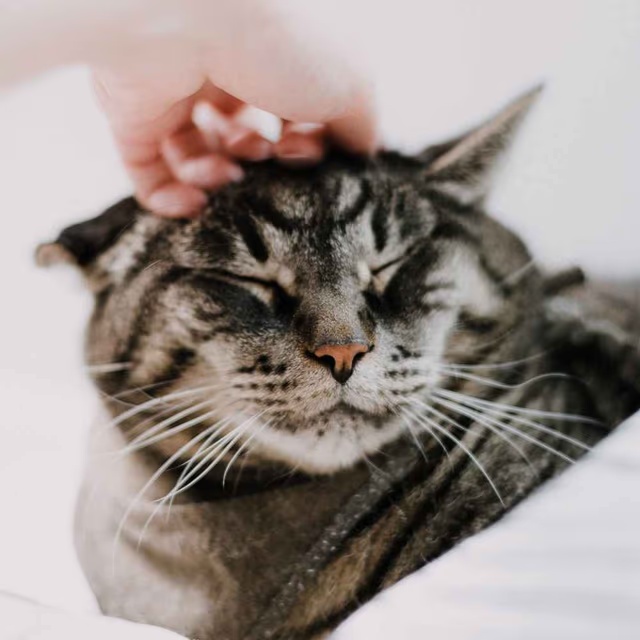
Sort a tabby into its type: thin parallel mackerel stripes, wide swirled classic marbling, distinct spots, or the stripeless ticked look. A patched tabby mixes any of these with red or tortoiseshell.

TRACE

Trace the word back to Baghdad

Spend a few minutes with the etymology of tabby, from a striped Baghdad silk to a striped cat. It is one of the more surprising word histories hiding in a pet's name.

LEARN

Learn the legends behind the M

Read the manger and Muezza stories people tell about the forehead marking, then compare them with the genetic explanation. The folklore is charming, even though the real answer is a gene.

SHARE

Share a tabby with one true fact

Post a photo of a tabby or a tabby mix and pair it with something most people miss. That every cat is genetically a tabby tends to surprise even longtime owners.

Test your knowledge

How well do you know National Tabby Day?

1 / 8

Is tabby a breed of cat?

Answer

It is observed every year on April 30, internationally and informally, by cat owners, shelters, and cat-welfare groups.

FOR MARKETERS & CREATORS

Turn every day into a moment your audience actually shows up for.

8.4M
Monthly readers
5K+
Holidays tracked