Holiday Calendar
560 saved#94 of 6,224

National Peanut Butter and Jelly Day

A food observance on April 2 celebrating the peanut butter and jelly sandwich, an American lunchbox staple, and its place in everyday cooking.

Friday
2
April 2027
Last updated February 7, 2026 · by the Holiday Calendar Team
Have an update or spot an error?
YEARLY DATEApril 2
OBSERVED INUnited States
CATEGORYFood
SUBCATEGORYBurgers
ORIGIN

Community Origin

FOUNDING ENTITY
Not documented
FIRST OBSERVED
Not documented
HOW THE HOLIDAY CAME TO BE

A national food day with no documented author.

No founder, organization, or establishment year for National Peanut Butter and Jelly Day can be traced to a reputable primary record. The National Peanut Board lists the day on April 2, and food brands and social media keep it alive, but who first declared it, and why April 2, is undocumented.

+ Know the story? Submit a founder Help us complete this holiday
INTRO

How a tea-room delicacy became the American lunchbox

The first peanut butter and jelly sandwich on record was not kid food. It was a refined tea sandwich, served on thin bread with tart currant or crab-apple jelly, written up in 1901 by a cooking writer named Julia Davis Chandler. National Peanut Butter and Jelly Day, observed every April 2, celebrates the everyday version that came later.

Chandler thought she had invented something. The combination, she wrote, was "delicious and, as far as I know, original." She had no idea she was describing a sandwich Americans would one day eat by the billions.

What turned a delicate appetizer into a staple was not a chef or a brand. It was cheap peanut butter, machine-sliced bread, and a couple of world wars. The story of how that happened is more interesting than the day itself, whose own origin nobody can document.

Advertisement
ORIGINS

Peanut Butter and Jelly Day history

INTRODUCTION

Peanut butter is older than most people think, and it has no single inventor. The push to grind peanuts into a spread ran through several hands at once in the late 1800s, which is why the credit is still argued over. The one name people guess most, George Washington Carver, is not even in the running; he did not invent it.

Canadian chemist Marcellus Gilmore Edson took out a patent for a peanut-paste process in 1884. A decade later, Dr. John Harvey Kellogg of the Battle Creek sanitarium patented his own peanut-butter method in the mid-1890s. St. Louis doctor Ambrose Straub patented a machine to make it in 1903.

CHAPTER 01

An elegant little sandwich

Into that world stepped Julia Davis Chandler. Her 1901 recipe, the earliest known published version, ran in the Boston Cooking-School Magazine of Culinary Science and Domestic Economics. The Library of Congress traces it to the November issue, page 188.

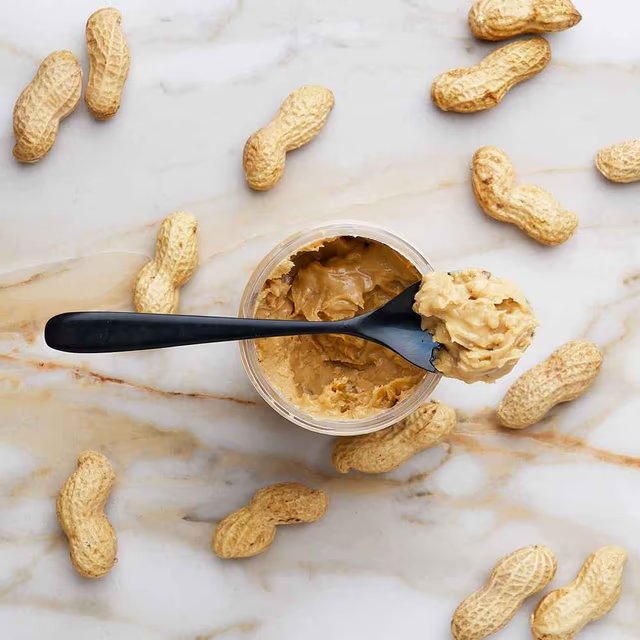
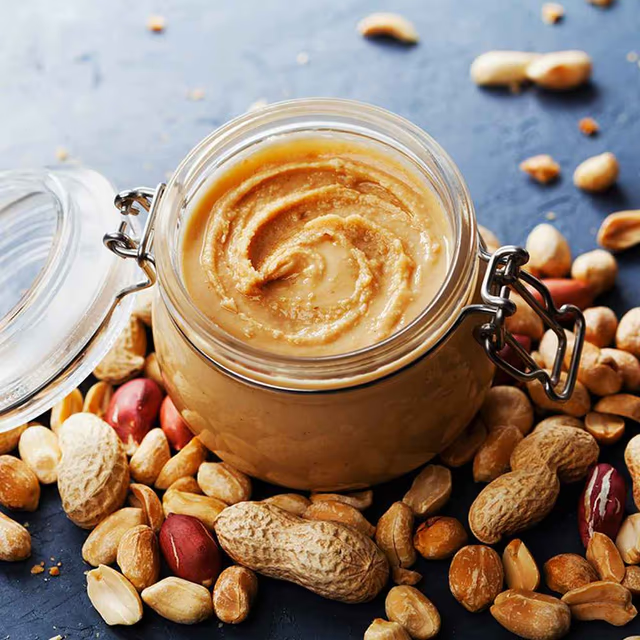
This was a high-end dish. Chandler paired the peanut paste with currant or crab-apple jelly, not the sweet grape spread of a school cafeteria. Peanut butter then was a delicacy, sold in tea rooms, not a pantry default.
CHAPTER 02

The day prices and machines changed everything

Two things pulled the sandwich down to earth. Peanut butter got cheaper as production climbed, and in July 1928, the first commercially sliced bread went on sale in Chillicothe, Missouri. A child could now build a sandwich without a knife or a parent.

By 1939, the New York City Board of Education reported that PB&J was the favorite sandwich among the 119,000 children eating free school lunches every day. The delicacy had become the default.

CHAPTER 03

The war that sealed it

Then came the rations. American soldiers in both world wars carried a one-and-a-half-ounce can of creamy peanut butter in their kits, and the U.S. Army says the trio of peanut butter, jelly, and bread seems to have come together in the field. Veterans came home with the habit, and sales jumped.

Where the holiday itself fits into this is the part nobody can answer. The sandwich has a documented past stretching back to 1901, but the day on April 2 does not. No founder, no proclamation, and no reason for the date survives in any reliable record, which is worth knowing before anyone repeats a tidier story.

TIMELINE

Timeline

First peanut-paste patent

Canadian chemist Marcellus Gilmore Edson patented a process for making a peanut paste, an early ancestor of peanut butter.

Earliest known PB&J recipe

Julia Davis Chandler published the first known peanut butter and jelly recipe in the Boston Cooking-School Magazine, using currant or crab-apple jelly.

A machine to make it

Dr. Ambrose Straub of St. Louis patented a peanut-butter-making machine, helping move the spread toward mass production.

Sliced bread goes on sale

The first commercially sliced bread sold in Chillicothe, Missouri, let children assemble a sandwich without a knife.

A school-lunch favorite

New York City reported PB&J was the most popular sandwich among 119,000 children on free school lunch.

Home from the war

Soldiers who ate peanut butter in their rations through World War II brought the habit home, and sales climbed.

WHY THIS DAY MATTERS

Why We Love National Peanut Butter and Jelly Day

MILITARY

A field ration came home and never left the kitchen.

Peanut butter rode into mass American habit partly on military supply lines, packed as a creamy can in soldiers' kits across two wars. The day quietly commemorates how a battlefield ration became a kitchen-table default.

ECONOMY

It celebrates the cheapest hot-lunch alternative there is

The National Peanut Board notes a PB&J costs about 90 percent less than a sandwich made with almond butter. That thrift is why it anchored school lunches and lean household budgets for a century.

FOODWAYS

It preserves a real American food origin story

Most everyday foods lose their paper trail, but the PB&J's earliest published recipe survives, dated and named, from 1901. The day keeps that documented lineage in view instead of letting folklore replace it.

BY THE NUMBERS

National Peanut Butter and Jelly Day by the Numbers

4.4 lbs
Peanut butter eaten per US person, 2023
60%+
US food peanuts that become peanut butter
94%
US households that keep a jar
34M lbs
US peanut butter made in 1907, up from 2M in 1899
39,303
PB&Js by Which Wich in one hour, 2015 record

GET INVOLVED

How to Celebrate National Peanut Butter and Jelly Day

EDITOR'S PICK

Build it the original 1901 way

Skip the grape jelly and try tart currant or crab-apple preserves on thin bread. You will taste the refined tea sandwich Julia Davis Chandler actually wrote down.

PACK

Pack one in a school or work lunch

Make the cheapest reliable lunch there is and send it out the door. Spread it, fold the bread, and you have the same five-minute meal that fed generations of kids.

RUN

Run a jelly taste test

Set out grape, strawberry, currant, and crab-apple and let everyone rank them against the same peanut butter. It turns a one-minute sandwich into an afternoon.

READ

Read up on who really made peanut butter

Look into the tangled patent history from Edson to Kellogg to Straub. The honest answer, that there is no single inventor, is more surprising than the myth.

DONATE

Donate jars to a food bank

Peanut butter is shelf-stable, protein-rich, and one of the most requested pantry items. A few jars dropped at a local food bank put the day to practical use.

Test your knowledge

How well do you know National Peanut Butter and?

1 / 8

Who published the earliest known peanut butter and jelly recipe?

Answer

It is observed every year on April 2 in the United States.

FOR MARKETERS & CREATORS

Turn every day into a moment your audience actually shows up for.

8.4M
Monthly readers
5K+
Holidays tracked