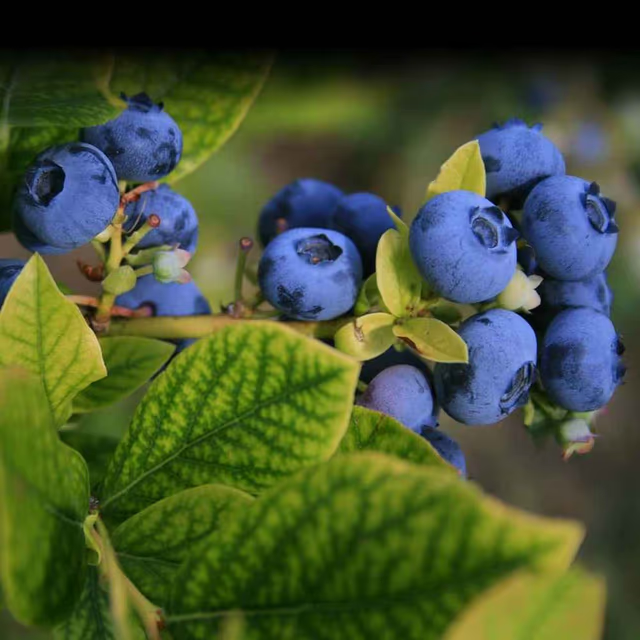
The acai palm (Euterpe oleracea) grows throughout the floodplains of the Amazon River basin, producing clusters of small, dark purple berries that ripen twice annually. Indigenous Amazonian communities have harvested the fruit for thousands of years, eating it as a thick, calorie-dense porridge called açaí na tigela, often mixed with cassava flour or tapioca. For these communities, acai was not a superfood or a trend. It was simply food: a reliable source of energy in a region where caloric density mattered.
The berry remained virtually unknown outside the Amazon until the 1970s and 1980s, when two forces brought it to Brazil's coastal cities. Surfers in Rio de Janeiro discovered it as a cheap, high-energy meal. Simultaneously, the Gracie family, the founders of Brazilian jiu-jitsu, adopted acai bowls as a post-training recovery food and recommended them to their students. The combination of surf culture and martial arts gave acai its first audience beyond the rainforest.