Global observance on September 1 to highlight cows' contributions to human civilization and sustainable development.
Unknown
Community Origin
World Cow Day emerged as a global observance first documented in 2025, organized through the worldcowday.org platform to unite sanctuaries, farms, and communities in celebrating the significance of cows to agriculture, culture, and sustainability.
Mark your calendar for World Cow Day on September 1, a global observance dedicated to one of the oldest and most important animals in human history. Cows were first domesticated roughly 10,500 years ago in the Near East, and today there are approximately 1.57 billion cattle worldwide, making them among the most widespread large mammals on Earth.
Whether your connection to cows is through a glass of milk, a religious tradition, or a childhood memory of a roadside pasture, this day is built around a simple idea: look closer at the animal you already know.
Cattle were among the earliest large animals domesticated by humans, with archaeological and genetic evidence placing the first domestication of taurine cattle in the Fertile Crescent around the eighth to ninth millennium BC. A separate domestication event produced zebu cattle in the greater Indus Valley region several thousand years later. From those two starting points, cows spread across every inhabited continent and became central to farming, trade, and daily diets.
In Hindu culture, the cow has been revered for centuries as Gomata, a symbol of purity, abundance, and sustenance, and festivals such as Gopashtami and Govardhan Puja include dedicated cow worship. In many parts of Africa, cattle herds have historically functioned as a primary measure of family wealth, while in Western agriculture the 18th century rise of systematic selective breeding produced the first formal cattle breeds and, eventually, hundreds of distinct types worldwide.
By the 21st century, the global cattle population had reached roughly 1.57 billion head, and cow’s milk production alone amounted to more than 780 million tonnes in 2023. Against this backdrop, World Cow Day was first observed on September 1, 2025, coordinated through the worldcowday.org platform as a global event linking sanctuaries, farms, and local communities that host visits and gatherings around that date.
Check the official World Cow Day guidelines for participating locations near you. Many sanctuaries welcome visitors for brushing, feeding, and simply sitting with the animals, and some host special open-farm events around September 1.
Groups like Farm Sanctuary provide lifelong care to cows rescued from neglect. Even a small contribution helps cover veterinary bills, food, and shelter for animals that would otherwise have no safe home.
Round up friends or family for a quiz on cattle history, breeds, and oddities. Use the quiz at the bottom of this page or build your own. Bonus points if you serve cheese, butter, or ice cream while you play.
If you visit a farm or spot cows on a drive, snap a photo and share it. The hashtags #WorldCowDay and #WCD help connect you with the global community marking the day and spread awareness to people who might not know the observance exists.
Use the day to look into where your milk, cheese, or beef comes from. Organizations like Befriend Cows maintain directories of ethical farms and welfare-focused programs, making it easier to align your purchases with your values.
Milk, cheese, butter, yogurt, beef, leather, and even manure-based fuel: no other single species provides this range of daily-use products at global scale. Entire regional economies, from the dairy belts of New Zealand to pastoralist communities in East Africa, still revolve around cattle.
With roughly 300 million cattle slaughtered each year worldwide, how these animals are raised and treated has real consequences for public health, land use, and greenhouse gas targets. World Cow Day spotlights pasture-based farming, sanctuary models, and policy shifts that connect animal welfare to broader sustainability goals.
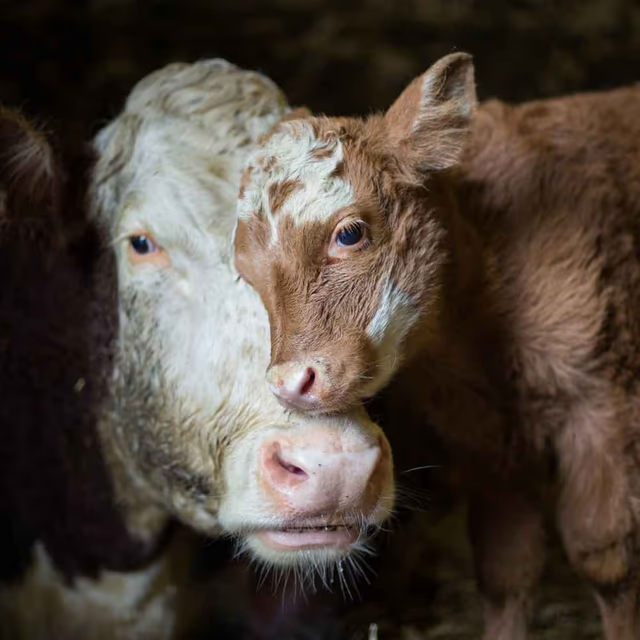
Research shows cows form lifelong friendships, display empathy through emotional contagion, and exhibit distinct personalities. Their heart rates drop when they are near a preferred companion, and they show measurable distress when separated from calves. Spending time around them, even briefly, tends to change how people think about livestock.