Holiday Calendar

National Cinnamon Roll Day

Next celebratedSunday, October 4, 2026

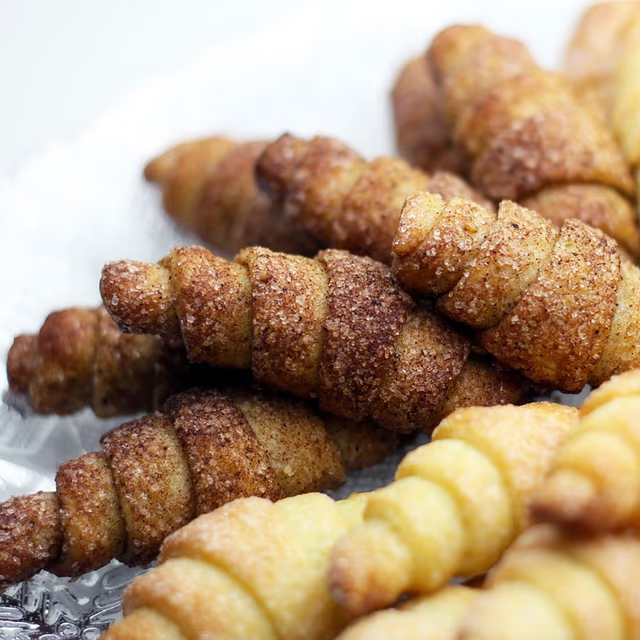
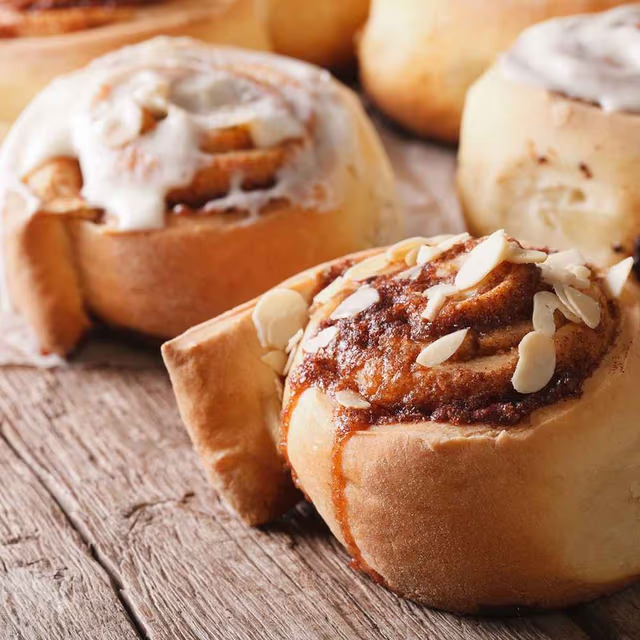
National Cinnamon Roll Day sets a morning aside for the pastry that takes its time. Buy one still warm from a bakery counter, or start the dough early and let the kitchen fill up while it bakes.

Countdown to the day
--DAYS
--HRS
--MIN
--SEC
Have an update or spot an error?
YEARLY DATEOctober 4
OBSERVED INUnited States
CATEGORYFood
SUBCATEGORYDesserts
ORIGIN

Institutional Initiative

FOUNDING ENTITY
Hembakningsrådet
FIRST OBSERVED
1999
HOW THE HOLIDAY CAME TO BE

A baking council's fortieth birthday present to itself.

Hembakningsrådet, a Swedish home baking council formed in 1959 by companies trading in flour, yeast and sugar, named October 4 as the cinnamon bun's day in 1999 to mark its own fortieth anniversary. The theme was devised by Kaeth Gardestedt, then the council's project manager, and no separate American establishment of the day has been located.

Read the council's own historyvia Hembakningsrådet
INTRO

The cinnamon roll's day was a Swedish council's birthday present

October 4 belongs to the cinnamon roll in the United States, and to the kanelbulle in Sweden. Only one of those two got there first, and it was not the roll.

The Swedish day was invented in 1999, when a home baking council called Hembakningsrådet turned forty and gave itself a present. Sweden's public broadcaster describes the council's job as getting more people baking at home, and also as lifting sales of flour, yeast and margarine.

The pastry goes by a different name in the United States. The date did not, so an American food holiday still turns on a decision a Swedish trade body made about its own anniversary.

Advertisement

DEALS & OFFERS

2026 ran without a deal

No tracked offers this year. Here’s who has celebrated in past years.

No tracked deals for 2026

National Cinnamon Roll Day ran on October 4 without a tracked deal. Browse past offers from previous years.


2 brands have run a deal
ORIGINS

Cinnamon Roll Day history

CHAPTER 01

The bun arrived long before the day

Sweden's Board of Agriculture dates the kanelbulle to 1867, the year Norra Hallands tidning printed what it records as the first writing about the pastry. Isof is more careful. It notes that some sources report earlier variants, while many hold that the bun turned up after the First World War, once supplies of milk, flour, sugar and spices had risen sharply.

What made it possible was equipment rather than imagination. Hembakningsrådet's own account credits compressed yeast, which appeared in the mid-1800s and made it possible to bake the porous, sweet bread that goes with coffee. The iron stove finished the job by replacing the open fireplace and making small cakes easy.

CHAPTER 02

A council with a commercial reason to exist

Hembakningsrådet was founded in 1959 by Swedish food companies trading in flour, yeast and sugar. Isof sets the scene: many Swedish women were moving into paid work, freezers stood in most homes, and factory made products filled the shelves. The founders wanted people to keep baking anyway.

CHAPTER 03

A fortieth birthday, and a date picked to dodge the crayfish

Forty years later the council turned its anniversary into a pastry. The cinnamon bun theme was the idea of Kaeth Gardestedt, then the council's project manager, who told a newspaper she wanted the day tied to omtanke, the Swedish word for thoughtfulness and care.

The date was chosen to stay out of everyone's way. Autumn is Sweden's heavy baking season, and October 4 sidestepped the fermented herring, crayfish and apple festivals that already crowd it; the University of Helsinki's Almanac Office adds that International Children's Day fell on that date in 1999. The professionals arrived later, and the council's own history says bakers and confectioners approached it for the fifth celebration, which is how the day spread through the trade.

TIMELINE

Timeline

The bun reaches print

Sweden's Board of Agriculture dates the kanelbulle's production from this year, when Norra Hallands tidning published what it records as the first writing about the pastry.

The modern bun takes shape

Hembakningsrådet's own account puts the creation of the modern cinnamon bun, the pastry it also calls the cinnamon snail, at around 1920, as the food rationed through the war was starting to come back.

Hembakningsrådet is founded

Swedish food companies dealing in flour, yeast and sugar set up a council to keep people baking at home while freezers and factory made goods spread through the country.

Cinnabon opens at SeaTac Mall

The first counter opens on December 4 south of Seattle, in the town now called Federal Way, built around a spice the company's supplier steered it to: Korintje cinnamon, harvested from the bark of trees that grow at very high elevations in Sumatra.

The council names the day

Hembakningsrådet marks its fortieth anniversary by giving October 4 to the cinnamon bun, on a theme devised by its project manager, Kaeth Gardestedt.

Into the Swedish almanac

The day is printed in the Swedish almanac. Isof, the national agency for language and folklore, reports that interest in it has risen steadily since, judging by media coverage.

WHY THIS DAY MATTERS

Why We Love National Cinnamon Roll Day

Bakeries

Sweden's public broadcaster calls it the most hectic day of the year for the baking trade.

October 4 is the most hectic day of the year for the Swedish baking trade, SVT reports. Martin Lundell, managing director of Sveriges bagare och konditorer, told the broadcaster that everyone in the business is working that day to keep up with production, and framed it as a way of drawing customers into the country's pastry shops and showing off craft baking.

Workplaces

Nearly half of Swedish employers hand one out

SVT reports that close to half of all employers in Sweden hand their staff a cinnamon bun on the day. Lundell's explanation is unsentimental. It is a simple way to show appreciation, the staff feel seen, and it costs an employer very little.

Registers

In America the chains carry it

In the United States the day runs on retail promotions rather than on an organiser. In 2025 Cinnabon sold its classic roll for a dollar to rewards members on October 4, between one and four in the afternoon. Kroger's coupon for a free Private Selection cinnamon roll had to be clipped on the day itself, and Schlotzsky's gave new rewards members a free Cinnabon MiniBon in the days on either side.

BY THE NUMBERS

National Cinnamon Roll Day by the Numbers

8.3 million
Estimated buns eaten in Sweden that day
Over half
Swedes expected to eat at least one bun
17 of 35
Danish cake samples over the coumarin limit
50 mg/kg
EU coumarin cap in 2013, traditional cinnamon bakery
15 mg/kg
EU coumarin cap in 2013, other fine bakery ware

GOOD TO KNOW

National Cinnamon Roll Day Around the World

Sweden

October 4 is kanelbullens dag, which Isof classes as a temadag, a theme day. Hembakningsrådet has run cinnamon bun design competitions for years, and its site asks people to write in and say how they keep the date.

Finland

Finland has kept the same date as korvapuustipäivä since 2006. The University of Helsinki's Almanac Office, publisher of the university almanac, notes that the day is observed there but is not printed in Finnish calendars. It also records the shape difference: Swedish buns are usually baked with the swirl facing up, while Finnish korvapuustit are cut with the swirl on the side and a dent pressed into the top.

Denmark

The same pastry started a regulatory argument in Denmark. European flavouring rules allowed more coumarin, a compound carried by cassia cinnamon, in traditional and seasonal bakery ware whose labelling refers to cinnamon than in ordinary fine bakery ware. Danish inspectors placed the kanelsnegl in the ordinary category while Swedish authorities had already accepted the kanelbulle as traditional, and a question in the Danish parliament put that difference to the minister. After a 2014 working group of the food authority and the trade, kanelsnegle and pastries made from the same dough were to be defined as traditional Danish bakery ware.

GOOD TO KNOW

Surprising facts about National Cinnamon Roll Day

The cinnamon most common in North America is not the true one

The National Center for Complementary and Integrative Health, part of the National Institutes of Health, says Ceylon cinnamon, Cinnamomum verum, is the one known as true cinnamon and grows mainly in Sri Lanka. The type most commonly sold in North America is cassia cinnamon, Cinnamomum aromaticum, grown in parts of southeastern Asia.

The bun in kanelbulle is a cousin of boulder

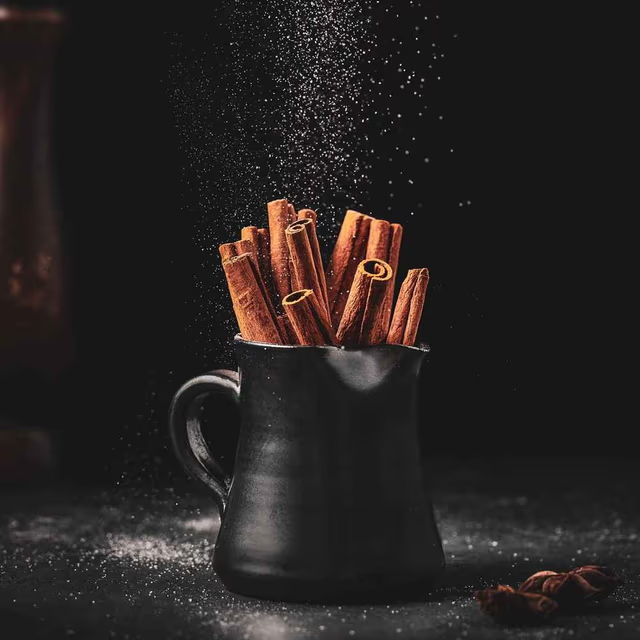
Isof traces bulle to Old Swedish, for something swollen or round, and relates it to boll, bula and the English words bun and boulder. Kanel came into Old Swedish through German and French from the Latin canna, meaning reed, which is a description of what a cinnamon quill looks like.

The founder used to hang buns on her neighbours' doors

The University of Helsinki's Almanac Office names Kaeth Gardestedt as the founder of the day and records a habit of hers: hanging freshly baked cinnamon buns on her neighbours' doors on the fourth of October.

The charity part of the plan never happened

Part of what the bakeries took on the day was to be paid into funds for projects on children and hunger. The Almanac Office says so and then says plainly that the plan was not realised.

The coiled shape was a shortcut

Isof reports that the cinnamon snail, the coil most people picture, is said to have appeared in the 1960s as a faster way of working: butter spread over the rolled out dough, sugar and cinnamon scattered on top, the sheet rolled up, cut into pieces and baked.

Hey Jerilyn, how'd you like to make the world's greatest cinnamon roll?
Rich KomenThe restaurateur behind Cinnabon, telephoning the baker Jerilyn Brusseau in 1985 after a franchising deal fell through and he was already committed to a mall lease

GET INVOLVED

How to Celebrate National Cinnamon Roll Day

EDITOR'S PICK

Go to a bakery counter

Buy the bun where somebody baked it this morning rather than off a shelf. Warm from the oven is the one thing a packet cannot give you.

BAKE

Bake a tray at home

A cinnamon roll is a yeast dough, so give it the morning. The Swedish method starts by warming milk until it is finger warm and pouring it over crumbled yeast, then working in the fat, sugar, salt and cardamom and finally the flour, and letting the dough rise before you shape it. Sweden's Board of Agriculture publishes the whole sequence.

FINISH

Finish them with pearl sugar

The traditional Swedish garnish is pearl sugar scattered over the top, not a layer of icing. The Board of Agriculture notes that outside Sweden icing is often used instead, so this is the cheapest way to taste the difference.

EAT

Eat it warm off the rack

Isof keeps first hand accounts of the day in its folklore archive. One of them describes the smell of fresh buns recalling a grandmother's baking, and a bun or two being taken straight from the cooling rack and eaten warm.

MAKE

Make it a fika

Hembakningsrådet traces the bun to Sweden's coffee culture, noting that coffee parties peaked in the 1950s and were replaced by the simpler fika. The word covers what is eaten and drunk and the way of socialising over it, so brew the coffee and stay in the chair.

Test your knowledge

How well do you know National Cinnamon Roll Day?

1 / 6

Which country's baking industry created the October 4 cinnamon bun day?

Answer

No. The Federal Register carries no document naming it and no US instrument creating or recognising it could be found. Sweden's national agency for language and folklore classes it as a temadag, a theme day, and in Finland the University of Helsinki's Almanac Office notes it is observed but not printed in the calendar.

COLOPHON

Sources

How we know what’s on this page. References, not endorsements.

13sources
8primary records
10independently dated
Primary records
Institutet för språk och folkminnen (Isof)2023-03-08
Kanelbullens dag
The Swedish government agency for language and folklore sets out the day's invention in 1999 for Hembakningsrådet's fortieth anniversary, the council's founding in 1959 by food companies trading in flour, yeast and sugar, Kaeth Gardestedt as the person behind the cinnamon bun theme, the day's entry into the Swedish almanac in 2004, and the etymologies of kanel and bulle.
View source
Hembakningsrådet
Historik om kanelbullens dag
The founding body's own account of the day, recording that the official cinnamon bun day was born on 4 October 1999 in time for the council's fortieth anniversary, that the council was formed in 1959, and that bakers and confectioners asked to join the celebration in its fifth year.
View source
Hembakningsrådet
The Cinnamon Bun Day
The council's English page, which dates the modern cinnamon bun to around 1920, credits compressed yeast from the mid-1800s and the iron stove for making sweet coffee bread practical, and describes the coffee party giving way to the simpler fika.
View source
Smaka Sverige, Jordbruksverket2022-08-16
Kanelbulle
The Swedish Board of Agriculture's product profile of the cinnamon bun, dating its production from 1867 and the first writing about it to Norra Hallands tidning in that year, and giving the traditional ingredients, the method and the pearl sugar garnish.
View source
Yliopiston almanakkatoimisto, University of Helsinki
Korvapuustipäivä on pullanystävän juhlapäivä
The Finnish calendar authority's account of the day in Sweden and Finland: Finland keeping it since 2006 without printing it in calendars, the reasons October 4 was chosen, the founder's habit of leaving buns on neighbours' doors, the charity funding plan that was never realised, and the difference between Swedish and Finnish bun shapes.
View source
National Center for Complementary and Integrative Health, National Institutes of Health2024-11
Cinnamon: Usefulness and Safety
The US federal health agency's page distinguishing Ceylon cinnamon, Cinnamomum verum, from cassia cinnamon, Cinnamomum aromaticum, and stating that cassia is the type most commonly sold in North America.
View source
Publications Office of the European Union2008
Regulation (EC) No 1334/2008, Annex III
The flavourings regulation as adopted, whose Annex III Part B sets maximum coumarin levels of 50 mg/kg for traditional and seasonal bakery ware whose labelling refers to cinnamon and 15 mg/kg for other fine bakery ware.
View source
Folketinget2013-12-06
S 518, 2013-14, with the Fødevarestyrelsen note on coumarin intake
The Danish parliamentary question putting to the minister that Danish authorities would not recognise the kanelsnegl as traditional bakery ware while Swedish authorities had recognised the kanelbulle, together with the Danish food authority's own note of 6 December 2013 reciting the coumarin limits.
View source
Additional coverage
SVT Nyheter2017-10-04
Kanelbullens dag blir myndig
Sweden's public broadcaster on the day's eighteenth anniversary, describing Hembakningsrådet's dual purpose of more home baking and higher ingredient sales, naming Kaeth Gardestedt, and quoting Martin Lundell of Sveriges bagare och konditorer on the trade's most hectic day and on employers handing out buns.
View source
Sveriges Radio2019-10-04
Swedes to eat millions of kanelbullar on cinnamon bun day
Radio Sweden's report of the bakers' and confectioners' association estimate that some 8.3 million buns would be consumed on the day, with over half the Swedish population eating at least one.
View source
European Commission, Representation in Denmark2015-03-23
Skidt og kanel...
The Commission's Danish office setting out why bakers use cassia rather than true cinnamon, the 2012 to 2013 sampling in which 17 of 35 pastries exceeded the lower coumarin limit, Sweden's earlier acceptance of the kanelbulle as traditional, and the 2014 working group that reclassified the kanelsnegl.
View source
Seattle Met2017-10
Scents from a Mall: The Sticky, Untold Story of Cinnabon
A long account of Cinnabon's founding, including Rich Komen's call to the baker Jerilyn Brusseau in 1985, the pre-leased SeaTac Mall counter in what is now Federal Way, the December 4, 1985 opening, and the choice of Korintje cinnamon from high elevation Sumatra.
View source
Cox Media Group2025-10-02
National Cinnamon Roll Day freebies and deals
A syndicated American newsroom item confirming that October 4 marks National Cinnamon Roll or Bun Day, and listing the 2025 offers from Cinnabon, Kroger and Schlotzsky's.
View source
FOR MARKETERS & CREATORS

Turn every day into a moment your audience actually shows up for.

8.4M
Monthly readers
5K+
Holidays tracked